Pet Stain and Odour Removal for Carpets Manchester
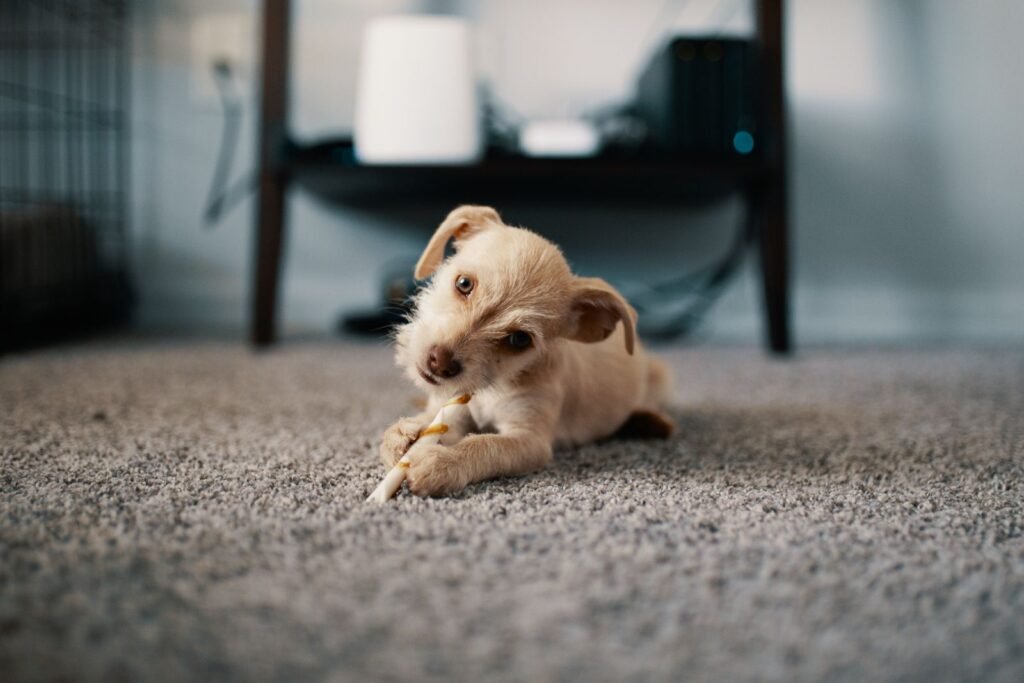
The patch that keeps coming back
You have blotted it, scrubbed it and sprayed it. The carpet looks clean, it dries, and for a few days you think the problem has gone. Then the heating comes on, or the room turns warm and close after a shut weekend, and the smell is back in the doorway before you have taken your coat off. Visitors notice it. You have stopped noticing your own hallway, which is arguably worse. That cycle is the single most common reason people ring us about pet accidents, and it is not evidence that you cleaned badly. It is evidence that the part of the problem causing the smell was never actually removed.
We treat pet urine, faecal staining and the odour that follows in homes right across Manchester, from terraces in Cheetham Hill and Crumpsall to city centre flats and family houses out towards Prestwich, Whitefield and Middleton. It sits inside our wider carpet cleaning in Manchester service, but it needs different chemistry and a different method from an ordinary spill. What follows is exactly what we do, why it works, and what you can fairly expect from it.
What urine actually does inside a carpet
When an animal urinates on carpet, very little of the liquid stays on the surface fibres. It travels down through the pile, through the primary and secondary backing, into the underlay and frequently onto the floorboards, screed or concrete underneath. A mark the size of a saucer on top is often the size of a dinner plate two layers down, because liquid spreads outwards as it soaks. Every domestic cleaning method available to a homeowner works on the top few millimetres. The reservoir sits below that, and it is the reservoir that smells.
Fresh urine is mildly acidic and, if you catch it in the first hour, it is genuinely easy to deal with. As it dries it changes character completely. The water evaporates, leaving behind concentrated salts and crystalline deposits along with bacteria feeding on the organic residue, and the pH shifts towards alkaline. Those dried salts are hygroscopic, which means they draw moisture out of the air around them. That is precisely why the smell is loudest on a damp Manchester morning, after a hot shower has run, or on the day the radiators come back on in October. The crystals themselves release almost nothing while they are dry, so the carpet can seem fine for weeks and then announce itself again the moment humidity climbs.
Two further things happen while the deposit sits there. Alkaline urine attacks carpet dye, which is where those yellow, orange or dull brown haloes come from, and beyond a certain point that colour change is permanent because the dye itself has been altered rather than covered. The same deposit also degrades the latex adhesive holding the carpet backing layers together, which is why long-standing accident spots sometimes feel loose, papery or delaminated when you press them. Time genuinely matters with pet accidents in a way it does not with most spills.
Why household sprays and DIY methods fall short
Most supermarket pet sprays do two things competently. They lift some of the surface colour and they lay a fragrance over the top. Neither of those actions reaches the underlay, so the deposit stays where it is and the fragrance simply fades faster than the urine salts do. Masking is the real trap here, because it buys a fortnight of calm and encourages everyone to leave the patch alone for another six months while it keeps working on the dye and the backing.
Heat is the other common own goal. Urine, vomit and faecal residue are protein based, and applying hot water or a domestic steam device to protein soiling can set it into the fibre in the same way heat sets an egg into a pan. Plenty of the permanent marks we are shown started as recoverable accidents that were steamed. Bicarbonate of soda absorbs odour temporarily but leaves a fine white residue deep in the pile that dulls the carpet and attracts soil. Vinegar knocks back smell for a day or two and does nothing whatsoever to the salts. Nothing in that list is a disaster, but nothing in that list solves the problem either. We have set out the home methods that are worth attempting and the ones that cause damage in our guide to what actually works for carpet stain removal, and it is worth reading before you reach for anything under the sink.
The one DIY action that reliably helps is the immediate one. If you catch an accident while it is still wet, press white paper towel or an old white towel firmly into the pile, stand on it, keep replacing it until it comes up almost dry, and do not rub. Removing sixty per cent of the liquid before it dries makes everything we do afterwards easier and cheaper.
How we treat pet stains and odour
Our process is built around getting treatment down to the same depth the urine reached, giving it time to work, and then physically removing what it has broken down. Skipping any one of those three stages is why partial treatments fail.
Inspection and moisture mapping
We arrive and find the full extent of the problem before touching anything. A UV lamp in a darkened room shows contamination that is invisible in daylight, including old accidents nobody in the house knew about, and it usually reveals that the affected area is considerably larger than the visible mark. A moisture probe tells us how far down the deposit sits and whether the underlay is involved. We check the carpet fibre type as well, because wool, which is common in older Manchester properties, needs gentler chemistry than a synthetic pile. If the survey turns up marks that have nothing to do with the animals, such as wine, coffee, ink or dye transfer from a rug, we handle those separately through our carpet stain treatment in Manchester service so that each mark gets the product it actually needs.
Enzyme and bacterial treatment
Enzyme based products work biologically rather than by scrubbing. They break the urea, uric acid salts and protein residue down into simpler compounds that can be flushed out and that no longer smell. The critical variable is dwell time. These products need to stay wet and in contact with the deposit for a sustained period to complete the reaction, which is the main reason a quick domestic application of the same category of product achieves so little. We apply enough volume to reach the depth the urine reached, and on heavier contamination we sub-surface inject so the treatment lands in the underlay rather than sitting in the pile. Products are selected for use in occupied homes with animals and children in them.
Flushing and hot water extraction
Broken down residue still has to leave the building. We flush the treated area with a controlled rinse and extract under strong vacuum, drawing the dissolved salts, the spent treatment and the loosened soil back out through the pile. This is the stage that separates a real treatment from a surface clean, because everything the enzymes released is now suspended in the flush water and will simply dry back into the carpet if it is not pulled out. In severe cases we lift the carpet, treat the underlay and subfloor directly, and seal the floor beneath before relaying, since a contaminated subfloor will keep feeding odour back through a perfectly clean carpet indefinitely.
Odour neutralising and drying
Once the source has gone we apply a neutralising treatment that pairs with any remaining odour compounds rather than perfuming over them. We then dry the area properly with air movers, because a slow drying carpet develops its own musty smell and confuses everyone about whether the treatment worked. Most rooms are walkable within a few hours and fully dry the same day, and we tell you honestly on the day if a particular patch is likely to need a second visit.
Scent marking and why accidents repeat in the same spot
There is a behavioural loop running alongside the chemical one. Animals return to soil where they can still detect their own scent, and a human nose is a poor guide to whether that scent has gone. This is why a family can clean a spot ten times and watch the cat use it on the eleventh day. Battersea’s guidance on why a cat starts toileting around the house is a sensible starting point. It sets out territory marking as one of the main causes, points towards a vet check to rule out medical issues such as cystitis before anything else, and recommends thorough enzymatic cleaning of soiled areas specifically so the animal is not drawn back to the same place.
That is the practical division of labour. A behaviourist or vet addresses why it is happening. We remove the residue that keeps inviting a repeat. Doing one without the other tends to disappoint. If your dog or cat has a favoured corner, tell us where before we start, because a spot that has been used repeatedly over months behaves differently from a single accident and we will plan the treatment around it.
Landlords, short lets and end of tenancy
Pet odour is now one of the more frequent flashpoints at check out, and it is a particular problem for short let operators around the city centre, Salford Quays and the university corridor where a review mentioning a smell does lasting damage. Odour is also genuinely difficult to argue about, because it cannot be photographed. A dated treatment record and a clear before and after account of what was found and removed is worth having whether you are the landlord defending a deduction or the tenant contesting one.
Our advice to landlords who accept pets is straightforward. Treat accidents as they are reported rather than saving them all for the end of the tenancy, because a fresh contamination is a small job and an eighteen month old one that has reached the underlay is not. Between tenancies, or once a year in a family home with animals, a full domestic carpet cleaning visit keeps the general soil load down and makes any new accident far easier to isolate and treat. We work to end of tenancy standards where the property is being handed back, and we can attend around a check out date at short notice.
Being straight with you about what is recoverable
Odour is the part we are most confident about. Where we can reach the deposit, treat it and extract it, the smell goes and stays gone. Colour is a different matter. If alkaline urine has stripped or altered the dye, no cleaning process restores it, because there is nothing left to lift. In those cases the honest options are re-dyeing the affected area, a repair using a piece from a wardrobe or under a sofa, or replacement, and we will say so on site rather than after taking payment. Where contamination has spread through a large proportion of the underlay, replacing the underlay is usually better value than repeated treatment, and we will tell you that too.
Common questions about pet stain and odour removal
How soon should I call after an accident
As soon as it is practical. Blot the liquid out straight away, then get treatment on it within a few days if you can. Dye damage and backing damage are functions of how long the deposit sits there, so early is always cheaper.
Can you treat an old stain that has been there for years
Usually yes for the odour, sometimes no for the colour. Old contamination is normally reachable and removable. Whether the visible mark comes out depends on whether the dye survived. We will assess both and tell you which of the two we can fix.
Will the smell definitely go
If we can reach the whole of the source, yes. The judgement call is whether contamination has passed into the subfloor, which happens with repeated accidents in one spot. That may require lifting the carpet and sealing the floor beneath, and we will identify it during the inspection rather than discovering it afterwards.
Is the treatment safe around my animals
We select products intended for use in occupied homes and we ask you to keep pets and children off the treated area until it is dry. Drying is normally a matter of hours with air movers running.
How long does a visit take
A single room with one or two affected areas is generally a morning, since the enzyme stage needs proper dwell time and cannot be rushed. Whole house work with multiple sites and any lifting involved takes longer, and we will give you a realistic time before we book it.
Booking pet stain and odour treatment in Manchester
The useful first step is a look at the property. Photographs rarely tell us what we need, because the visible mark and the actual contamination are usually different sizes and only a UV lamp and a moisture probe settle it. Tell us how many spots you are aware of, roughly how long they have been there, what has already been used on them and what the carpet is made of if you know, and we can give you a sensible idea of scope before we attend.
We cover Manchester and the surrounding boroughs for households, landlords, letting agents and short let operators, and pet treatment can be combined with a full clean of the rest of the property in the same visit if the whole carpet is due attention. If you are not sure whether you need targeted pet work or a full clean throughout, start on our main Manchester carpet cleaning page and get in touch from there. Tell us it is a pet job and we will bring the right equipment first time.
One call can cover the whole property.
Cleaning, maintenance, caretaker services, fire alarm testing, insulation and carpet fitting, quoted from a written specification after a free site visit.