What Does a Block Caretaker Do? Duties, Schedules and Costs
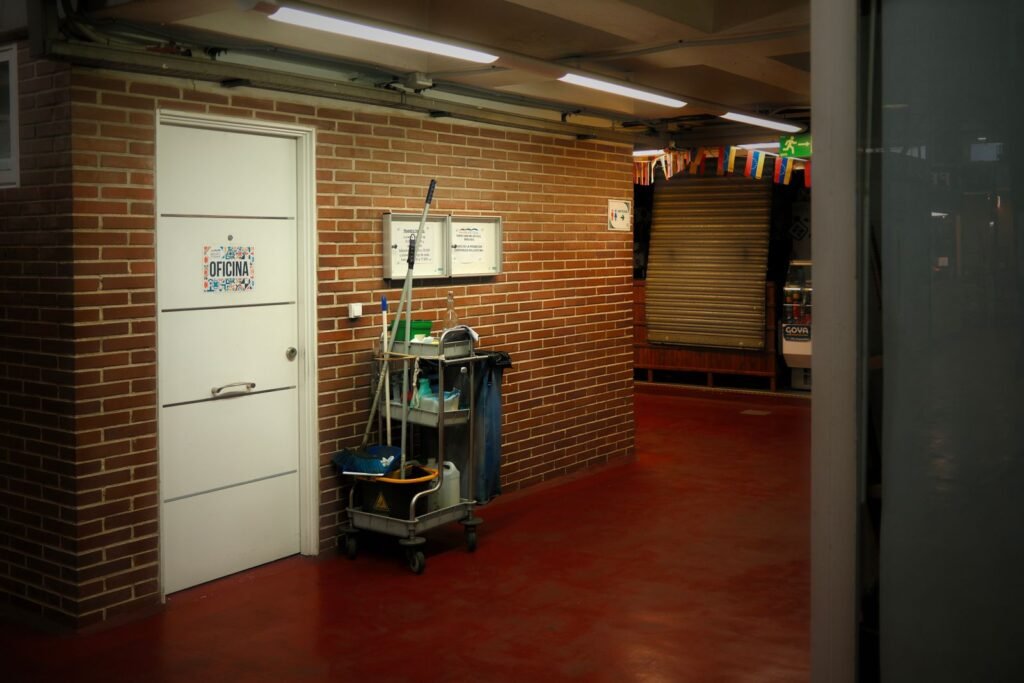
Why Block Owners Keep Asking What a Caretaker Actually Does
Most residents’ management companies, freeholders and managing agents arrive at this question for the same reason. Something in the block has slipped. Bins are still on the pavement two days after collection, a landing light has been out for a fortnight, the bin store smells in warm weather, or a contractor turned up and there was nobody to let them in. Someone suggests hiring a caretaker, and the conversation stalls because nobody around the table can define the role tightly enough to budget for it or defend it to leaseholders.
The confusion is fair. Caretaker, porter, concierge, site manager and handyperson get used interchangeably across Manchester’s blocks, and the same job title can mean four hours a week at a converted mill in Ancoats or a full-time resident post at a large estate in Prestwich. This guide sets out what the role covers in practice, how the staffing models compare, how caretaking interlocks with a cleaning specification, and what genuinely drives the cost. It is written for the people who have to approve the budget and then answer for it.
What a Block Caretaker Actually Does
A block caretaker is the person accountable for the day-to-day physical condition of the common parts and the immediate grounds. They are not a security officer, and they are not a building manager holding contractual authority over major works. They are the hands and eyes on site that keep small problems small. In the blocks we cover, the role divides reliably into five areas of work, and it sits alongside rather than replaces the scheduled commercial cleaning in Manchester that keeps a building presentable week to week.
Communal presentation and spot cleaning
A caretaker handles what happens between cleans. That means clearing takeaway leaflets and post from the lobby floor, wiping the entrance glass after a wet morning, sweeping leaf fall from the car park ramp, mopping a spill in the lift before it becomes a slip claim, and removing graffiti or fly-posting from the bin store door. This is reactive presentation work driven by what the building throws up on the day, not a repeatable specification.
Refuse, recycling and bulky waste
Waste is the single largest source of caretaking complaints in Manchester blocks, and the most valuable thing a caretaker does. The work covers moving bins to the collection point and returning them, keeping the bin store swept and free of loose bags, separating recycling that residents have got wrong, breaking down cardboard so the store does not fill in three days, and logging and arranging removal of the mattresses and broken furniture that appear beside the bins. Where a block has a chute system, the caretaker checks the hopper and the chamber and reports blockages before they back up.
Minor repairs and first-line maintenance
The money case for caretaking sits here. Replacing lamps and tubes, resetting a tripped circuit, adjusting a door closer, tightening handrail fixings, easing a sticking fire door, clearing a gully or a blocked external drain, replacing door entry handsets and re-fixing signage are all jobs that cost a call-out fee plus labour when a contractor does them and cost minutes when someone competent is already on site. The boundary matters. A caretaker does not touch fixed electrical work, gas, lifts, fire alarm panels or anything needing a certificated trade.
Inspection and reporting
A caretaker walking the building on a set route is the cheapest condition survey a block will ever get. A good one records what they find and passes it up in a form the agent can act on, with a photograph and a location. Escape routes blocked by bikes and buggies, fire doors wedged open, failed emergency lighting, water ingress staining a ceiling, loose paving, tampered door entry, and the first signs of pest activity all get caught weeks earlier when someone is looking for them.
Access, deliveries and contractor supervision
Someone has to let the lift engineer in, sign for the parcel, hold the key for the plant room, and confirm the gardener actually attended. On smaller blocks this is a handful of hours a month. On a larger site it is a structured part of the week, and it is often the duty that persuades a board the post pays for itself, because unattended contractor visits get rebooked and rebilled.
Resident, Live Out and Visiting Caretakers
The three staffing models produce very different costs and very different service, and choosing the wrong one is the most common mistake we see.
A resident caretaker lives on site, usually in a flat provided as part of the package. The response is immediate and the presence deters a lot of low-level nuisance. It is also the most expensive and the most legally involved option, because providing accommodation brings tax treatment, tenancy status and eventual vacant possession into play, and because a resident post creates an expectation of availability that the contract needs to define carefully.
A live out caretaker works fixed hours on site and goes home. This is the standard for medium and large Manchester developments. It gives predictable cover, a known face for residents, and clean boundaries around hours.
A visiting caretaker attends on set days for a set number of hours, often across several blocks in a round. For most blocks under fifty units this is the right answer, and it is how our caretaker services for Manchester blocks are normally structured. Two visits a week of three hours each will comfortably cover bins, lamps, spot cleaning and an inspection round on a typical converted mill or a modern three-storey block, and the cost sits at a level a service charge can absorb without a difficult budget meeting.
Where Caretaking Stops and Cleaning Begins
These are different disciplines and they should be specified separately, even when one supplier delivers both. Cleaning is scheduled, repeatable and measurable. The same tasks happen on the same days to the same standard, which is why a communal area cleaning schedule can be audited line by line and signed off. Caretaking is responsive and judgement based. Its output varies with what the building presents that week.
Blurring the two causes real problems. If the caretaker’s hours get absorbed by mopping stairwells because the cleaning frequency is too low, the inspection round quietly disappears and nobody notices until a fire risk assessment picks up six months of blocked escape routes. If the cleaner is expected to move bins and change lamps, the specification stops being measurable and complaints become impossible to resolve because there is no agreed standard to point at. Write two documents, define the handover point, and put both under one point of contact so nothing falls into the gap.
Building a Weekly Schedule That Holds Up
Caretaking hours should be anchored to the building’s fixed events rather than spread evenly for the sake of it. The most useful anchor is the refuse collection day.
- Visit one, the day before collection. Bins out and staged, bin store swept, cardboard broken down, bulky items logged and quoted for removal.
- Visit two, the day after collection. Bins returned and repositioned, store hosed or swept, any missed collection reported to the local authority the same day.
- Inspection round on one of the two visits. Fixed route, same order every time, covering entrance, lobby, stairwells, landings, lift car, bin store, plant room door, car park and external boundary.
- Reactive time held back on each visit. Lamps, closers, spills, minor repairs and anything raised by residents or the agent since the last attendance.
- A monthly deeper task rotated through the year. Gully and drain clearance, external glass, signage clean, bike store tidy, car park sweep.
Attendance should be evidenced, not assumed. A dated photo log or a simple signed sheet at the point of work removes almost every argument a board will otherwise have with a supplier, and it gives directors something concrete to show leaseholders who question the line in the budget.
What Good Site Standards Look Like
Where a managing agent is involved, site staff sit inside a wider professional framework. The Property Institute, formed from the merger of ARMA and the IRPM, is the professional body for residential property management in England, Scotland and Wales, and its accredited agents commit to a published Consumer Charter and set of standards covering areas including building safety, fire risk management and planned preventative maintenance. Reading the standards an accredited managing agent signs up to is a quick way for a board to understand what an agent will expect from anyone working on site, and how caretaker reporting is supposed to feed the agent’s own obligations.
In practical terms that means a few non-negotiables. Site staff carry identification and residents know who they are. Anyone working alone has a check-in arrangement. Work is covered by employer’s and public liability insurance and by a written risk assessment and method statement for the tasks involved. Chemicals are stored under control of substances hazardous to health rules and the safety data sheets are on site. Anything the caretaker finds that touches fire safety goes up the same day, in writing, because the responsible person under fire safety law needs a record of it. Holiday and sickness cover is named in advance rather than improvised.
What a Block Caretaker Costs
Caretaking is quoted either as an hourly rate or as a fixed monthly charge built from contracted hours, and the honest answer to what it costs is that the hours drive everything. Rates in Greater Manchester move with statutory minimum pay levels, which are reviewed each April, and with the employer’s costs stacked on top of the headline wage, including national insurance, holiday pay, pension contributions, insurance, uniform, equipment and supervision. Any quote materially below the underlying employment cost is a signal to ask how the cover is actually being staffed.
The variables that move a price are the number of attendances a week, the hours per attendance, the size and layout of the block, whether there is a bin chute, whether the post is resident, whether lone working applies, whether tools and consumables are included, and what happens on bank holidays. Two hours a week on a twelve-unit conversion is a different product from twenty hours a week on a two-hundred-unit development, and the per-unit cost falls sharply as the block gets larger.
On recovery, the cost is normally chargeable to the service charge where the lease permits staff or management of the common parts, and it should be shown as its own budget line rather than buried inside a general maintenance heading. Boards should also watch the duration of any agreement. A contract running longer than twelve months can be a qualifying long-term agreement, which brings the statutory Section 20 consultation process into play once the cost per leaseholder passes the threshold set in the consultation regulations. Getting that wrong caps what you can recover, so take advice before signing a multi-year term.
How to Specify the Role So It Is Auditable
Most caretaker disputes trace back to a job description written in one afternoon and never revisited. A specification that survives contact with a leaseholder challenge does five things.
- Lists duties as tasks with a frequency, not as responsibilities. Bins out Tuesday, not oversight of refuse.
- States the exclusions explicitly. No work at height above step ladder level, no electrical work beyond lamp replacement, no entry to leaseholders’ flats, no work inside the plant room beyond visual check.
- Defines the reporting route, the format and the deadline, including what counts as urgent and who receives it out of hours.
- Names the cover arrangement for holiday, sickness and bank holidays, and who confirms attendance.
- Sets a review point, usually annual and aligned with the service charge year, so hours can be adjusted against what the log actually shows.
Review the log before renewal rather than the anecdotes. If the reactive time is consistently unused, reduce the hours and tell leaseholders you did. If it is consistently overrun, you have evidence for an increase that a board can defend at an AGM.
Getting the Right Cover for Your Block
A caretaker is not a luxury line in a service charge budget. It is the cheapest way to keep a block’s fabric, waste and common parts under control, and it usually pays for itself in avoided contractor call-outs and avoided complaints. The buildings that run well are the ones where the caretaking hours are matched honestly to the block’s size and rubbish volume, where the duties are written down and evidenced, and where cleaning and caretaking are specified as two jobs handled by one accountable supplier.
We work with residents’ management companies, freeholders and managing agents across Manchester and the surrounding boroughs, covering caretaking, communal cleaning, window cleaning and periodic deep cleans under a single point of contact. If you want a straight view of what your block actually needs, we will walk the site, look at the bin arrangement and the common parts, and set out the hours and the schedule that fit. Talk to us about the cover your building needs and we will put a specification in writing before anyone quotes a price.



Want this done properly at your property?
Tell us the building and the problem. We quote from a written specification, and contracts start with a three-month trial rather than a long tie-in.