Commercial Waste and Confidential Shredding for Manchester Offices
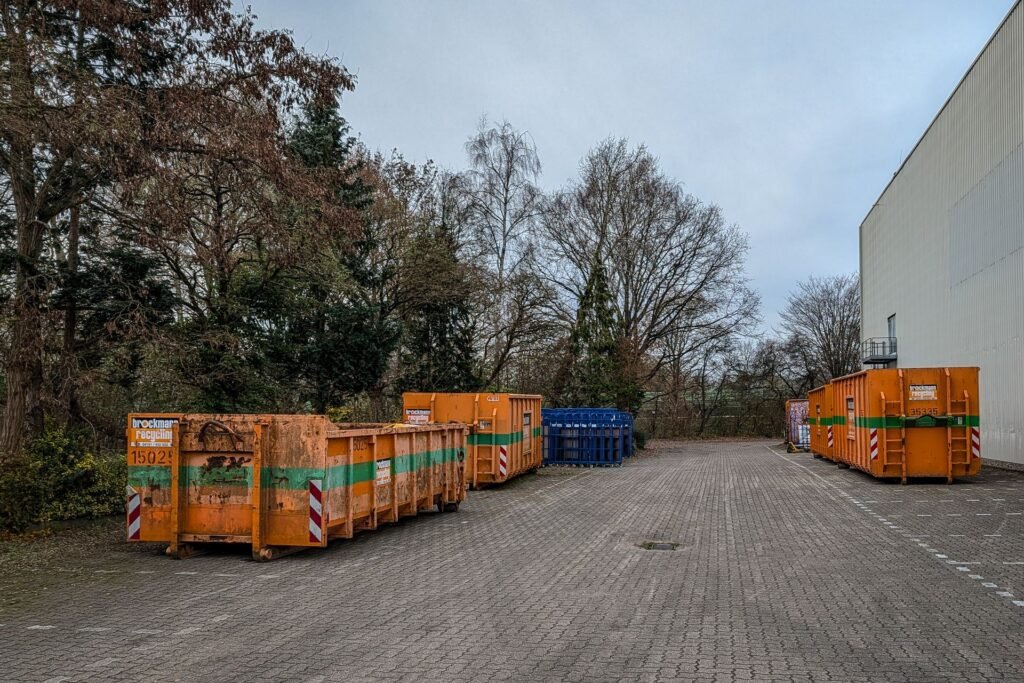
“Getting rid of the rubbish” at a Manchester office or commercial site is actually two separate legal duties wearing one set of overalls. There is ordinary commercial waste, packaging, food waste, general office rubbish, which sits under environmental law and a duty of care that follows the waste even after it leaves your bins. And there is confidential paper waste, anything carrying a customer’s or an employee’s personal data, which sits under data protection law entirely, with its own, quite different, obligations. Treating both as one generic bin round the back of the building is how businesses end up exposed on either front without realising it.
The duty of care that follows your commercial waste after it leaves your site
Government guidance on business waste sets out a duty of care that does not end the moment a bin is emptied. A business must “complete a waste transfer note for each load of waste that leaves your premises” and “check if your waste carrier is registered to dispose of waste.” Critically, the responsibility does not stop at hiring someone and assuming the rest is their problem: a business must “not allow the waste carrier to dispose of your waste illegally (and report them to Crimestoppers if they do),” and is expected to “recycle waste that’s like household waste, including food and dry recyclables such as glass, plastic, metal, paper and card,” keeping waste to a minimum by working through prevent, reuse, recycle and recover, in that order, before anything goes to general disposal.
In practice, that means two things a lot of businesses have never actually checked: whether the waste transfer notes for their site are genuinely on file and complete, and whether the carrier collecting their waste is currently registered, not just registered when the contract started years ago. Both are quick to check and easy to overlook precisely because the bins get emptied reliably either way, giving no obvious sign that the paperwork behind it has quietly lapsed.
Confidential paper waste is a different problem, under different law
Waste containing personal data, employee files, customer records, financial documents, is not primarily a waste management question at all. It is a data protection one, governed by UK GDPR and the Data Protection Act 2018 rather than environmental duty of care law, and the consequences of getting it wrong land differently, on the business as a data controller, not just on whoever happened to carry the bin away. The Information Commissioner’s Office, the UK’s data protection regulator, is direct about the practical standard expected: “shredding is a common way to destroy paper documents and is usually quick, easy and cost-effective,” and where a business uses an external company to do it, the same guidance says plainly, “make sure you’re satisfied they’re a reputable company that will destroy the documents securely,” and that “you’ll need to check the credentials and processes of anyone you hire… you also need to have a contract in place if you’re going to grant them access to the personal data you hold.”
What this actually looks like day to day in an office
The practical shape of good confidential waste handling is simple even though the legal backdrop is not: a locked, clearly marked confidential waste console rather than an open box under a desk, so paper is genuinely secured between the moment someone finishes with it and the moment it is destroyed, not just informally “kept aside.” Regular, scheduled collection rather than letting a console fill for months, since a locked bin still holding six months of records is not much safer than an open one if it sits there long enough for keys to go missing or get shared casually. A single, agreed destruction standard applied consistently, since the value of shredding is in the standard being followed every time, not in it being followed occasionally when someone remembers. We would also always recommend asking a shredding provider for a simple written confirmation of destruction for anything more sensitive than routine paperwork, a small ask that gives an actual record to point to rather than a general assumption that it was “sorted.”
Old computers, hard drives and phones are not general waste either
Paper is not the only place personal data ends up when an office clears out. Old computers, laptops, hard drives, USB devices and phones frequently still hold personal or client data long after they have been retired, and the ICO’s guidance on records disposal treats this as its own category, not an afterthought to paper shredding: organisations should “use and document secure disposal methods (eg device wiping, degaussing, or hardware shredding),” store devices awaiting destruction securely, and keep a log of what is waiting to be destroyed and where it currently is. A cupboard of old office computers waiting to be “dealt with at some point” is a genuine data protection exposure, not just clutter, however harmless it looks.
Electrical and electronic equipment is also treated separately from general commercial waste under its own regulations, precisely because it cannot simply go in a general skip alongside ordinary rubbish. Whether it is a handful of old keyboards and phone handsets or a office’s worth of retired computers and monitors during a refurbishment or a move, that equipment needs a properly arranged, appropriately licensed collection route, the same underlying discipline as the duty of care for any other commercial waste, just for a category that carries an added data risk on top.
Where our contract fits in, and where the legal responsibility stays with you
As part of an ongoing cleaning or facilities contract, we can manage the practical logistics: keeping confidential waste consoles emptied on a sensible schedule, coordinating collection with a provider, and making sure general commercial waste segregation, recycling versus general waste, actually happens at the bin rather than only on paper. What we do not do, and would never claim to, is take on your legal duty of care for where your commercial waste ends up, or your data controller responsibility for personal data in confidential waste. Checking a waste carrier’s registration, holding a proper contract with a shredding provider, and keeping transfer notes and destruction confirmations on file is the business’s own responsibility to hold, even where we are the ones physically managing the day-to-day collection and logistics around it. We are always happy to be the point of contact who makes sure those pieces are actually in place, rather than assumed, as part of the wider office cleaning and warehouse cleaning contracts we run across Greater Manchester.
Stopping confidential paper ending up in the wrong bin by accident
The most common failure in a busy shared office is not a deliberate shortcut, it is an honest mistake made at speed: someone finishing a call, clearing a desk before a meeting, and dropping a printed document with a customer’s name and account details into the nearest general recycling bin because the confidential console was across the room or, worse, did not exist on that floor. Preventing this is less about policy and more about placement: a confidential waste point within easy reach of every desk cluster and every printer, clearly distinguishable from general recycling by colour or signage rather than a handwritten label that fades within a month, and enough of them that using the correct one is actually the easier option, not the one that requires a special trip. Where we manage waste logistics as part of a cleaning contract, we will always flag a floor plan where the confidential points sit too far from where the paper is actually generated, since that gap is where good intentions quietly fail in practice.
Naming who actually owns this, the same way a fire door needs a responsible person
Just as building fire safety needs a clearly identified responsible person rather than a vague assumption that someone is handling it, confidential waste and data disposal work best when one named person within a business actually owns the process, checking the shredding contract is current, that transfer notes and destruction confirmations are actually filed rather than assumed to exist, and that new starters know which bin is which from day one rather than picking it up by guesswork. It does not need to be a senior role or a specialist title. It needs to be someone who will notice if the confidential console has not been emptied in two months, or if nobody can actually produce a contract for the company doing the shredding when asked. That single point of ownership is usually the difference between a process that looks fine on a policy document and one that would actually hold up if it were ever tested.
A simple starting point
If you are not entirely sure whether your site’s waste transfer notes are current, whether your carrier’s registration has actually been checked recently, or whether your confidential waste process would hold up if anyone ever asked, the honest first step is finding out rather than assuming it is fine because nothing has gone wrong yet. We can talk through what a facilities-cleaning contract can practically cover for your business, alongside the wider commercial cleaning support we provide, and where the legal responsibility needs to stay clearly with you. Get in touch through our contact page and we will tell you plainly what we can help with.



Want this done properly at your property?
Tell us the building and the problem. We quote from a written specification, and contracts start with a three-month trial rather than a long tie-in.