Cleaning Standards for Schools and Nurseries, What September Inspections Look For
Term starts, and so does the scrutiny
The first weeks of September bring a return to full occupancy across every school and nursery in Manchester, and with it comes the heaviest run of touch point contact the building will see all year. New starters in reception and nursery classes arrive without the immune resilience of children who have spent a full year in group settings, and the combination of that and the general back to school mixing of households is exactly why illness tends to spread fastest in the first half term rather than mid year. Cleaning standards that were adequate for a quiet August suddenly are not adequate for a full building of children and staff, and inspectors, parents and Ofsted all notice the difference quickly.
This guide covers what actually matters for school and nursery cleaning at the start of the year, the touch point discipline that keeps illness from spreading through a class, the specific hygiene expectations that early years settings are held to, and how out of hours scheduling keeps the cleaning invisible to the school day rather than disruptive to it. Our commercial cleaning service across Manchester covers education settings alongside offices and retail premises, scheduled around term time and inset days.
Touch point discipline, and why it matters more in September
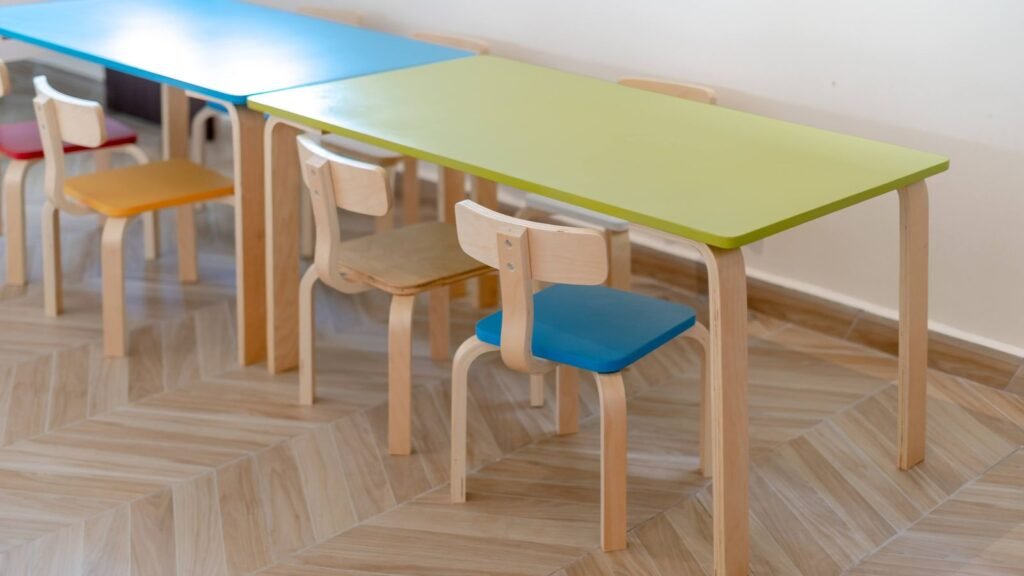
Every classroom has a small set of surfaces that get touched constantly through the day. Door handles, light switches, table tops, the edges of shared equipment like laptops and tablet trolleys, taps and soap dispensers in the toilets, and in early years settings the toys and resources that pass through dozens of small hands before lunchtime. A general clean at the end of the day that covers floors and bins but skips a dedicated pass over these specific surfaces misses the areas that actually drive transmission of the coughs, colds and stomach bugs that spread fastest through a class in the first half term.
The discipline that works is simple to describe and easy to under deliver in practice. Touch points get wiped down at least once during the school day as well as at the end of it, not just once. Shared equipment in early years rooms gets cleaned on a rotation rather than left until visibly dirty, since by the time a toy looks dirty it has usually already passed through many more hands than it should have. And toilets, always the highest priority area in any school, get checked and refreshed at multiple points across the day rather than cleaned once in the morning and left.
What EYFS settings are specifically expected to do
Early years settings carry hygiene expectations that go further than a general school clean, because the age group involved has less developed hygiene habits of its own and a much lower tolerance for infection risk. Nappy changing areas, if the setting has them, need a clear cleaning and disinfection routine between every single change, not a periodic wipe down. Mouthed items such as dummies, cups and any toy that goes in a child’s mouth need to be cleaned separately from general surfaces and never shared between children without cleaning in between. Hand washing facilities need to be genuinely accessible to the age group using them, not just present, and kept stocked and functioning throughout the day.
The Early Years Alliance’s infection control guidance sets out the practical hygiene routine that early years settings are expected to run day to day, and it makes a point worth repeating to any provider building a cleaning schedule around it: the aim is not to sterilise the setting, which is neither possible nor useful, but to break the specific chains of transmission that matter most, hands, mouthed items and frequently touched surfaces, consistently and without gaps.
Out of hours scheduling that does not disrupt the day
Schools and nurseries run on a timetable that leaves very little slack for a cleaning team to work around during the day itself. The practical answer, and the one most settings across Manchester already use, is a two part schedule. A full clean overnight or in the early morning before staff and children arrive, covering floors, toilets, classrooms and communal areas thoroughly while the building is empty. And a lighter, targeted touch point pass during the school day itself, timed around breaks and lunch rather than lesson time, so a cleaner moving through a corridor or refreshing a toilet block does not interrupt teaching.
Getting this split right depends on knowing the site’s actual timetable, not a generic school day assumption, since inset days, after school clubs, breakfast clubs and any lettings the building has in the evening all change when the building is genuinely empty and when it is not. A schedule built around the real pattern of use, agreed with the site manager rather than guessed at, is what keeps the cleaning consistently thorough without ever being the reason a classroom is not ready when the first child arrives.
Managing illness without closing rooms unnecessarily
Every September, some settings respond to the first wave of coughs and colds by closing a room or sending staff home on a precautionary basis, which is disruptive for parents and costly for the setting. A tighter cleaning and hygiene routine at the start of term is the more sustainable answer, because it reduces the transmission risk in the first place rather than reacting to it once illness has already spread through a class. Settings that invest properly in the first fortnight of term, rather than treating cleaning as a fixed cost to be minimised, consistently report fewer disruptions through the rest of the half term, because the routine has already broken the chains of transmission that would otherwise have spread through shared toys, tables and door handles.
Products, storage and what changes around young children
Cleaning chemistry in an early years setting needs more thought than in an office or shop, simply because of who shares the space. Any product used where young children are present needs to be stored properly out of reach between uses, never left on a trolley or surface mid task while a cleaner steps away, and rinsed thoroughly from any surface a child might mouth or touch immediately afterwards. This is not about avoiding effective products, a genuinely clean surface still needs a genuinely effective cleaner, it is about sequencing and storage discipline so that effectiveness and child safety are never actually in tension. Staff and cleaning teams working in these settings benefit from a short, specific induction on this, separate from a general cleaning brief, because the margin for error is smaller here than in almost any other setting we work in.
Outdoor areas and the parts of the site people forget
Playgrounds, outdoor early years areas and the entrance canopy where parents queue at drop off all see heavy use in September and rarely get the same attention as classrooms. Outdoor play equipment picks up the same hand contact as an indoor toy but is far less likely to be on anyone’s cleaning schedule, and a wet Manchester September leaves outdoor surfaces damp for long stretches, which is exactly the condition mould and algae need to establish on plastic play equipment and outdoor seating. A proper September reset extends to these areas, not just the classrooms, since a setting that looks immaculate indoors but has a visibly grubby outdoor area sends a mixed message to any parent walking past it at pickup.
Communicating standards to parents
Parents of new starters, particularly in nursery and reception, are often anxious about hygiene in a way that parents further up the school are not, simply because their child has less established immunity and less awareness of their own hygiene habits. A setting that can describe its cleaning routine clearly, what gets cleaned, how often, and what the specific EYFS-level hygiene measures are for nappy changing and mouthed items, gives parents a concrete answer rather than a vague reassurance. That clarity is worth having ready for open evenings and induction meetings, not just for an inspector.
The difference a proper September reset makes
A school or nursery that starts the year with genuinely deep cleaned classrooms, not just tidied ones, buys itself a real advantage through the first half term. Carpets and soft flooring that carried a summer of dust and, in many buildings, a period of being used for holiday clubs or lettings, benefit from a proper deep clean before term starts rather than a quick vacuum. Our guide to deep cleaning for commercial premises in Manchester covers what that reset should include if your building has not had one yet this term.
General workplace cleaning standards, the ones that apply to any building with staff and visitors rather than education settings specifically, are covered in our wider guide on workplace cleaning standards UK employers are expected to meet, which is worth reading alongside this piece for any site that combines a school function with staff office areas.
Getting your setting ready
We work with schools, nurseries and early years settings across Manchester on scheduled cleaning that runs around the real timetable of the building, with the touch point discipline and hygiene routine that early years inspection expects built in as standard rather than treated as an extra. If your setting has not had its September reset yet, or you want a proper schedule in place before half term, get in touch and we will build it around your site.
Want this done properly at your property?
Tell us the building and the problem. We quote from a written specification, and contracts start with a three-month trial rather than a long tie-in.