Cleaning a Retail Unit Between Tenants
Retail unit cleaning between tenants needs a clear description of the space being handed over. The outgoing tenant, owner and incoming occupier may have different expectations. Start with the agreed cleaning scope, the remaining fixtures and the work still taking place. A clean should be planned around the condition the unit will actually be in.
This is a cleaning brief, not a decision about the whole lease or property handover. Ask the responsible parties to confirm their requirements separately. The contractor needs practical instructions for the rooms, surfaces and access. Those instructions should explain what is included and who will review the result.
Define the part of the premises being cleaned
Identify the unit by its address and agreed entrance. List the sales area, back rooms, staff kitchen, washrooms and storage spaces included in the request. Where access passes through a shared building, distinguish the unit from common areas. Do not assume shared corridors are part of the same contract.
Record whether the clean is for an outgoing handover or preparation for an incoming tenant. The practical tasks may overlap, but the timing and expected condition can differ. A unit waiting for new fittings may need a different sequence from one being returned with fixtures in place.
Ask the owner or authorised contact to confirm which fittings remain. Shelves, counters, display cases and other items can affect what is accessible. Cleaning around a fixture is different from removing it. Keep removal and relocation responsibilities outside the cleaning scope unless a separate arrangement is expressly agreed.
Walk the space before requesting a final proposal. Note which areas are visible, which are locked and which need further inspection. An old floor plan may not show alterations made by the outgoing tenant. Use the current layout to describe the work.
Record the starting condition before work begins
Keep a factual record of the surfaces and fixtures covered by the request. Note visible damage separately from dirt or marks. A cracked tile, damaged fitting or worn finish should not be recorded as a cleaning task that can necessarily be corrected.
Photographs can help identify a location, but they need context. Record the date and the area shown. Avoid photographs that reveal confidential papers or personal information left behind. Store the relevant images with the agreed specification rather than mixing them into general property messages.
Describe uncertain marks without promising their cause or removal. Ask the contractor to assess them during the visit. Some surfaces may need a suitability check or further information from their manufacturer. Record the limitation before agreeing what the clean should achieve.
If goods or documents remain, agree who deals with them. Do not assume that a cleaner can discard anything left in the unit. Identify approved waste separately from items needing an owner’s decision. Clear instructions prevent a cleaning visit from becoming an unplanned clearance job.
Plan the main floor around its actual finish
Identify the floor finish wherever possible. Carpet, sealed hard flooring and tiles can need different methods. Share any existing care instructions. If the finish is unknown, record that question and ask the contractor to assess it before proposing treatment.
Discuss the areas previously covered by displays or counters. They may have a different condition from the open sales floor. Access may depend on another party removing fixtures first. State which areas will be clear on the cleaning date and which remain outside reach.
Separate loose dirt removal from any further treatment. Ask how the proposed method fits the surface and the material present. A request for a stronger chemical is not a substitute for understanding the finish. Do not assume that a different colour or worn patch will disappear through cleaning.
Allow for the working route through the unit. Cleaning the floor while trades continue to pass through can affect the sequence and result. Agree when the area will be available. Keep any drying or restricted-use period within the handover discussion.
Specify glazing and display surfaces
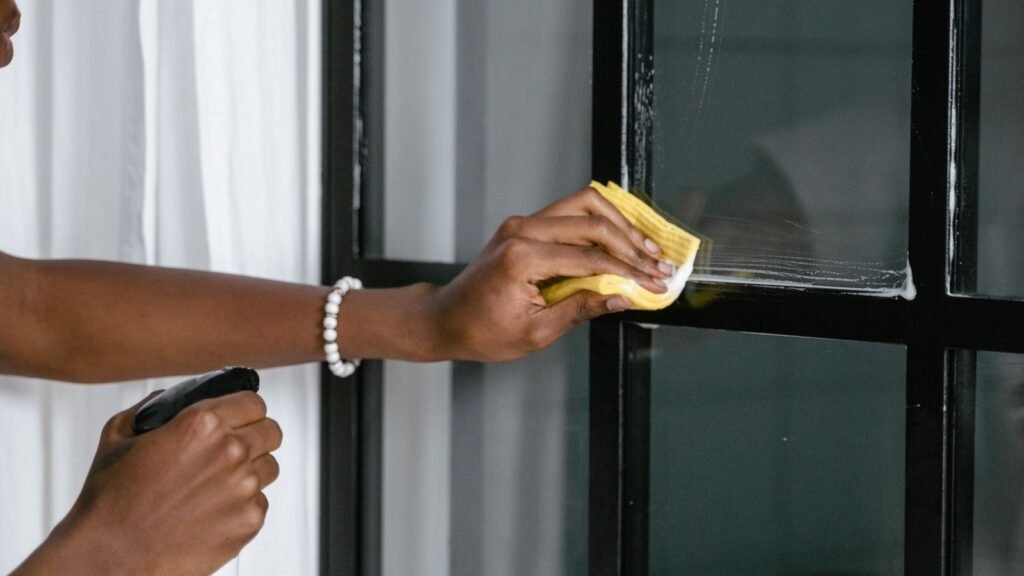
List the glass included in the request. This may be entrance glass, accessible display panels or internal partitions. Distinguish internal faces from any external work being requested. The contractor should know the location and access method before confirming the scope.
Ask about films, applied graphics and coatings before choosing a cleaning method. Their condition and care instructions may affect what can be done. Removing an old graphic or adhesive can be a separate task. Do not treat it as ordinary glass wiping without assessment.
Include frames, accessible sills and nearby surfaces when they belong in the request. A broad instruction to clean the window can leave these details unclear. Describe the surfaces in plain terms. State any area that cannot be reached under the proposed arrangement.
For a service discussion, compare the specification with retail cleaning in Manchester. Use the actual glazing, floor and back-room tasks to explain the request. The service should be discussed against that list rather than an assumed standard shop layout.
Include back rooms and staff facilities
Back rooms can be overlooked when the focus stays on the sales floor. Identify stores, staff areas, kitchens and washrooms that are included. Record which cupboards or fixtures may be opened or moved. Keep uncertain permissions visible before work starts.
For kitchens and washrooms, list the surfaces and accessible fittings covered by the clean. State what remains in place and what another party will remove. Do not assume appliance servicing or repairs are included. Cleaning should stay within the agreed tasks.
Check water and power arrangements needed for the proposed method. A vacant unit may not have the same access as an occupied shop. Confirm the arrangements through the authorised site contact. Do not leave the contractor to discover missing supplies during the booked visit.
Identify any room that requires separate access or supervision. Decide who can provide it and what happens if access is unavailable. The completion record should distinguish an inaccessible room from one that has been cleaned. Keep the reason factual and specific.
Coordinate the clean with remaining work
Ask whether removal, repair or fitting work will still be happening. Cleaning may need to follow that work rather than happen alongside it. Confirm which areas will be ready and which may change afterwards. A final clean cannot prevent later work from creating new dirt.
Separate an initial clean from a later final visit if both are needed. Describe the purpose of each visit. Do not assume an early clean includes returning after all trades have finished. Agree any additional visit and its scope before adding it to the programme.
Name the person who confirms that the unit is ready for cleaning. This contact should understand the access and the remaining work. Record the agreed date and any conditions affecting it. Discuss changes promptly if the unit will not be available as described.
Keep the cleaning request consistent with the wider commercial end-of-tenancy cleaning requirements. The authorised parties should confirm any handover obligations. The contractor can then explain the cleaning work it is being asked to perform.
Keep access and site arrangements clear
Agree how the contractor enters and leaves the unit. Confirm key arrangements, approved arrival times and the contact for an access problem. Where the premises are within a larger building, check any registration or service entrance rules that actually apply.
Keep working materials and equipment in approved areas. Do not assume that a vacant shop can be used without regard to its site arrangements. The cleaning route should account for the people still working there and the exits the building requires to remain usable.
The government’s fire safety risk assessment guidance for offices and shops is directed at those responsible for those premises. Cleaning should fit the arrangements they have established. A cleaning visit is not a replacement for a fire risk assessment or an assurance of fire-safety compliance.
Report a site restriction or apparent hazard through the agreed contact. The contractor should not be expected to decide broader building arrangements while completing a cleaning task. Record any effect on access or completion. Ask the responsible party to resolve what falls outside the cleaning scope.
Review the clean before the unit changes hands
Agree who will inspect the completed work and what specification they will use. A room and task list gives the review a clear basis. The reviewer should know which areas were included and which were inaccessible. An empty-looking room is not proof that every agreed task was completed.
Record any remaining issue by location and task. Distinguish incomplete cleaning from surface damage or work that was excluded. Keep the contractor’s response with the specification. This helps the responsible parties understand what was done and what still needs a separate decision.
Keep cleaning records separate from acceptance of the wider property handover. A checklist or invoice describes a service. It does not, by itself, establish that every lease requirement has been fulfilled. The authorised parties need to make their own handover decisions using the relevant documents.
Questions for a retail unit cleaning brief
Should display fittings be removed before the clean?
Confirm which fittings remain and who can move approved items. The contractor should know which surfaces will be accessible. Do not assume that removing counters or displays belongs in an ordinary cleaning request.
Can cleaning start while shop fitting continues?
Discuss the sequence and the condition expected after other work finishes. An initial visit and a final clean may serve different purposes. Agree the scope of each visit and record any return visit separately.
How do we describe glazing clearly?
Name the glass, frames and accessible faces included. Mention films or graphics whose care needs assessment. Separate internal work from any external request. Confirm the access method before the date is agreed.
Who should approve the completed clean?
Choose the authorised reviewer and the agreed specification before work begins. Record excluded or unavailable areas. The review should distinguish the cleaning result from decisions about the wider property handover.
What information helps with a vacant unit proposal?
Provide the current layout, surface details, task list, access arrangements and remaining works. Include the intended handover date without treating it as proof the unit is ready. A site visit can settle unresolved questions.
Arrange the retail unit cleaning discussion
Prepare a list of the areas, fixtures and surfaces included. Confirm the sequence of remaining work and who approves access. Keep the starting-condition record with the specification. This gives the contractor a practical basis for a proposal.
To discuss the clean, share the condition and handover requirements of your retail unit with Exclusive Property Facilities. Separate cleaning tasks from removal, repairs and wider property decisions. Confirm the final scope before the cleaning date is agreed.

Want this done properly at your property?
Tell us the building and the problem. We quote from a written specification, and contracts start with a three-month trial rather than a long tie-in.