Specialist Warehouse Cleaning, What Makes a Warehouse Job Specialist
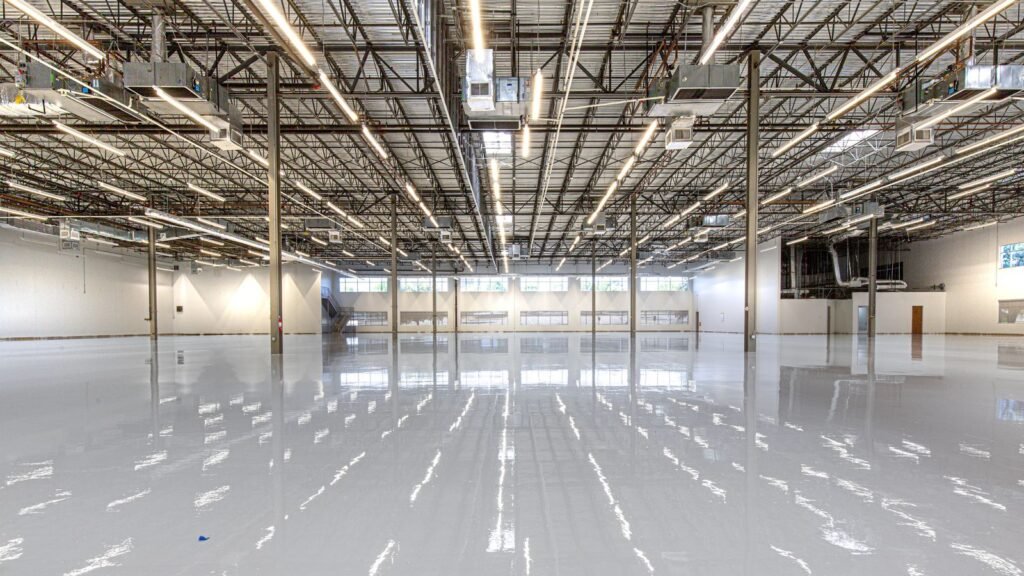
Most warehouse cleaning is routine. Professional warehouse cleaning services handle it with a team that sweeps and scrubs the floors, clears dust from the surfaces it can reach and keeps the welfare areas in order, all on a schedule that fits the operation. Specialist warehouse cleaning services start where that routine stops being enough. The product, the building or the access conditions mean that a standard visit could put stock, people or a customer audit at risk.
This guide is written for the person who has to write the specification. It explains what turns a warehouse job into a specialist one, what to put in the brief and what a contractor should be able to show you before the first visit. It is guidance for buyers, not a list of what any one provider offers, so check each point against the service you are actually being quoted for.
What makes a warehouse job specialist
A job becomes specialist when one or more conditions change what safe and effective cleaning looks like. The five that come up most often are a food-grade or chilled environment, high-value or regulated stock, high-bay racking, dust-sensitive zones and work that can only happen inside a tightly limited window. A site can have several of these at once, and each one adds questions that a quote for sweeping and scrubbing will not answer.
A useful test is to ask what could go wrong if a general cleaning team followed its standard routine on your site. If the answer is cross-contamination, disturbed or lost stock, a fall from height, dust settling on open product or a missed handover, you need a written method that fits your building, not just a rate for a team.
Food-grade and chilled stores
Where food, packaging or consumer products are stored, the site usually works to its own hygiene rules and may be audited against a certification scheme. BRCGS, for example, publishes a Storage and Distribution Standard that it describes as a risk-based framework for food, packaging and consumer product operations at every stage of the distribution chain. If your site works to a scheme like this, the cleaning specification should follow your own procedures, not the other way round.
That means giving the contractor your hygiene and entry rules before the quote, not on the day of the visit. Ask who approves the cleaning products and equipment used in each zone, how equipment is kept apart between zones so that nothing travels from a dirty area into a clean one, and what the team wears and does on entry. If the site has records it expects the cleaning team to complete, say so in the brief.
Chilled areas add practical points of their own. Floors can stay wet for longer, surfaces overhead may carry condensation, and a team can only work comfortably in the cold for limited periods. A method that removes water as it cleans, rather than leaving the floor to dry, matters more here than almost anywhere else. Scrubber-driers are built to do exactly that, so ask whether the proposed machines suit a cold, damp floor.
High-value, regulated or customer-owned stock
Some stock is valuable, regulated or owned by a customer who sets their own access rules. Cleaning inside caged areas, secure zones or segregated bays should only take place on terms you control. Decide who may enter, whether an escort is needed, what may be moved and who confirms that the area has been returned to you in the condition you expect.
Do not leave it to the cleaning team to decide whether a pallet can be shifted. Stock movement belongs with your authorised staff, and the brief should say so. Name the zones that need supervised access, the times when stock counts or inspections make an area unavailable, and what the contractor should do if a seal, label or pallet looks disturbed. A contractor who asks for these details is thinking about your risk. One who does not ask has not understood the job.
High-bay racking and work at height
Exclusive Property Facilities carries out high-level cleaning of racking, beams, ducting and lighting rigs as part of its warehouse cleaning service in Manchester, normally as a periodic deep clean rather than a routine visit. That is a sensible pattern for most sites, because the work needs access equipment, planning and time that a weekly floor visit does not have.
Cleaning at height is not simply a taller version of cleaning a shelf. The specification needs a chosen access method, with clarity on who supplies and operates the equipment, an exclusion zone beneath the work so nobody walks under it, and a plan for protecting or moving the stock below. Cleaners should not climb racking to reach an upper level. Agree each of these responsibilities before the day, and keep the cleaning visit separate from any inspection of the racking itself.
Ask for the order of work too. Dust falls, so overhead surfaces are normally cleaned before the racking and the floor beneath them. A contractor who plans to do the floor first and the beams afterwards will be cleaning the same area twice, or leaving a fresh layer of dust on a floor that has just been signed off.
Dust-sensitive zones
Dust matters everywhere in a warehouse, but it matters more in some places. Packing benches, areas where products are open or lightly wrapped, and zones where labels, packaging or electronic items are handled all need a method that keeps dust out of the air and off the goods. In those areas the way dust is collected becomes part of the specification, not a detail left to the team on the night.
Dry sweeping can lift dust back into the air, so ask how it will be collected and whether the team works from the top down so that what falls is picked up in the same visit. Agree the sequence with the area supervisor, including which sensitive areas are covered or protected beforehand and who does that preparation. The aim is that nobody has to re-clean a packing bench because overhead work was finished after it.
Out-of-hours work and handing areas over
A busy distribution operation may have very little time when an area is empty. Exclusive Property Facilities schedules warehouse cleaning around shift patterns, either in sections during operating hours or as a full clean during a shutdown, and either can be specialist work. The plan has to say which areas are handed over, when, and in what condition they will be handed back.
For a section-by-section clean, define the boundary and who controls it. Decide who closes the aisle, who confirms that vehicles and pallet traffic have stopped, and how the contractor is told when the area is needed again. Where a site runs overnight shifts, the access arrangements should be agreed with the operations team so that cleaning does not clash with goods handling or vehicle movements.
For a shutdown, remember that stopped production does not always mean an empty building. Stock, maintenance work and deliveries can still be in the way. Ask the contractor to confirm in writing which areas it expects to reach and what condition they must be in on arrival, so that a locked room or an unmoved pallet does not turn into an argument afterwards.
Floors in a controlled environment
The floor takes most of the cleaning effort, and in a controlled environment the method has to suit the surface. Warehouse floors can be concrete, power-floated, epoxy-coated or resin, and the wrong machine or product can damage the surface it is meant to protect. Give the contractor the floor specification and ask which machines and products will be used on it.
Exclusive Property Facilities describes scrubber drying as the backbone of its commercial floor cleaning work, because the machine lifts the dirty water straight back up and leaves the floor walkable within minutes. That matters in a chilled store, a wet process area or any zone where a damp floor is a hazard. Ask every contractor you are comparing the same question, and ask what happens on a floor that cannot be taken out of use for long.
What to put in a specialist warehouse cleaning brief
A specification the contractor can price accurately covers the following points.
- The zones involved, with the controls on each, such as hygiene rules, secure areas, sensitive areas and anything off limits.
- The surfaces to be cleaned, including floor types, racking, overhead structures and welfare areas.
- The standards your own site follows, with copies of the procedures the team has to work to.
- Access and timing, including shift patterns, shutdown windows, vehicle routes and who controls entry.
- The equipment and products proposed, and any approvals needed before they are brought on site.
- How spills are reported and dealt with between scheduled visits.
- The record you want at the end of each visit, including areas that could not be reached.
Send this with photographs and a floor plan if you have them. The more precisely the zones are described, the less the quote relies on assumptions that fall apart on the first visit.
What the contractor should be able to show you
Before the first visit, ask to see the documents that show how the work will be done safely. Exclusive Property Facilities states on its warehouse page that team members working in industrial environments receive a health and safety induction suited to the site, that it holds public liability insurance and that it complies with a site’s PPE and visitor requirements. Whoever you choose, ask for the same assurances in writing, together with the risk assessment and method statement for the tasks involved, particularly work at height and any product use near open food or stock.
Ask for equipment to be matched to the floor, with the machine type and product named. Check that the people on the rota have received the induction your site requires, and that any training you need to see is evidenced rather than described. A contractor that cannot say who will be on site, or what they have been trained to do in a zone like yours, has not yet scoped the job.
How the work is verified
Agree what done looks like before the first visit, using the specification rather than a general impression. A walk-round with a checklist is the simplest method. The supervisor and your site contact review each zone against the agreed tasks, note anything not reached and record why. Photographs help where they are permitted, although some zones will not allow cameras, so confirm that early.
If your site uses its own hygiene checks, such as swab tests or internal audits, keep them with your quality team and agree how the results will be shared with the contractor. Cleaning that passes a visual check does not automatically meet your own standard, and the contractor can only correct what it is told. Agree how a failed check is handled, who decides whether an area needs a return visit and where the record is kept.
Distribution centres and larger sites
The same questions apply to distribution centre cleaning services, only on a larger scale. A distribution centre usually has more vehicle traffic, more shifts, more loading doors and a mix of warehouse, office and welfare space under one roof. That raises the cost of getting the scope wrong, because an unclear boundary between a cleaned zone and a working one affects more people.
For a larger site, split the specification into zones and agree a plan for each one, rather than writing a single description for the whole building. A routine floor clean in the despatch area, a controlled clean in a food-grade bay and a high-level clean in the racking aisles are three different jobs, even when one contractor does all three under one contract. Industrial warehouse cleaners should be able to explain how the pieces fit together, including who supervises each zone and how the handover record is kept.
Questions about specialist warehouse cleaning
What counts as specialist warehouse cleaning?
It is cleaning where a standard routine would not be safe or effective, for example in food-grade or chilled stores, secure stock areas, high-bay racking, dust-sensitive zones or tightly limited access windows. The specification and the method are written for those conditions.
Is specialist cleaning the same as industrial cleaning?
Not necessarily. Industrial cleaning describes the type of site and the scale of the equipment. Specialist cleaning describes the extra controls a particular zone needs. A large industrial warehouse can be cleaned on a routine basis, while a small controlled store may need a specialist method.
Can specialist cleaning happen while the warehouse is operating?
Sometimes. Working in sections during operating hours is possible where the boundaries and the traffic can be controlled, and some zones are better handled during a shutdown. The right choice depends on the zone, the stock and who controls access.
What should I send a contractor to get an accurate quote?
Send the floor plan, the zones and their controls, the floor types, access and timing, your own procedures and the record you expect at the end of each visit. Photographs of the areas, including the high ones, make the quote more accurate.
Plan the brief before you request a visit
If you manage a warehouse or distribution unit in Greater Manchester, describe the zones, the controls and the timing, and Exclusive Property Facilities will agree what can be covered before work starts. Its commercial cleaning services across Manchester set out the wider range, and a site visit is the quickest way to turn the points above into a scope you can price.
Want this done properly at your property?
Tell us the building and the problem. We quote from a written specification, and contracts start with a three-month trial rather than a long tie-in.