Legionella and Water Hygiene, What a Manchester Facilities Contract Should Cover
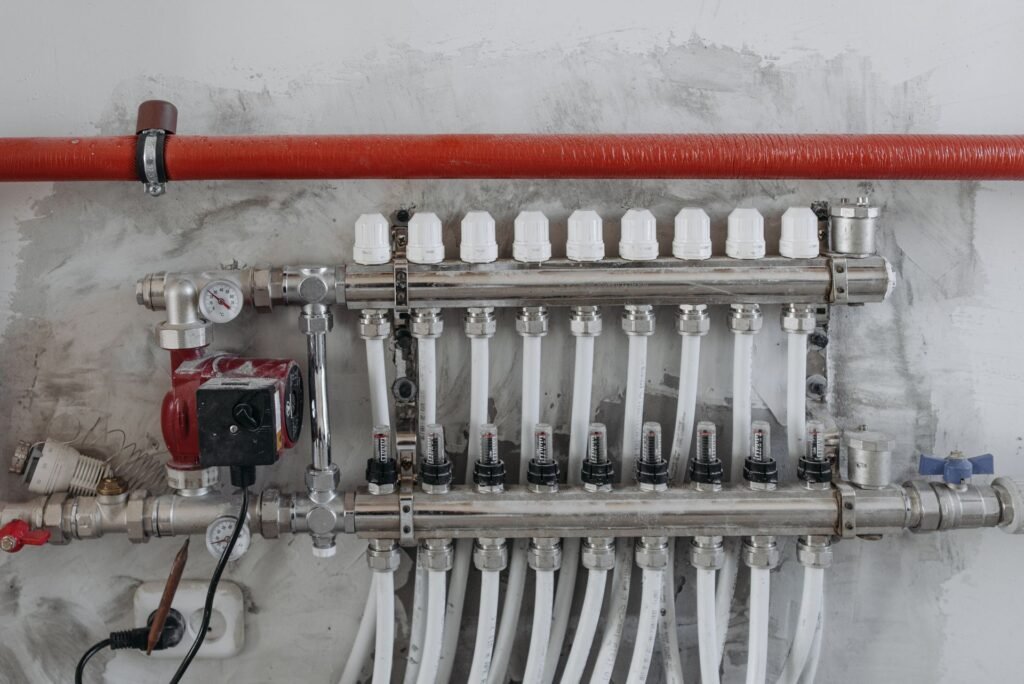
Legionella and water hygiene rarely come up when a business first talks to us about a cleaning or caretaking contract. The conversation usually starts with floors, washrooms, communal areas and bin stores. But any building with a water system, a cold water storage tank, a hot water cylinder, infrequently used taps or showers, a rarely visited plant room, carries a legionella risk that someone is legally responsible for managing, and a facilities-cleaning contract sits close enough to that risk that it is worth being clear about what we can genuinely help with and what needs a specialist.
Who is actually responsible
Under the Health and Safety Executive’s guidance, the duty sits with whoever is in control of the premises and its water system, whether that is an employer, a building owner, or a managing agent acting for them. HSE’s own summary of what a duty holder must do is direct: “identify and assess sources of risk,” “manage any risks,” “prevent or control any risks,” “keep and maintain the correct records,” and “carry out any other duties you may have,” all set out under the Approved Code of Practice known as ACOP L8. This is not a duty that can be quietly assumed to belong to whoever cleans the building. It belongs to whoever controls the premises, and a cleaning or caretaking contractor’s role is to support that duty holder, not to replace their responsibility for it.
Where residential blocks are involved, HSE’s separate guidance for landlords frames the same underlying duty in tenancy terms: a landlord must “assess the risk from exposure to legionella to ensure the safety of their tenants” and put proportionate controls in place. Whether the building is a commercial office, a managed block of flats, or a mixed-use site, the underlying obligation is the same: know where the risk sits in the water system, and manage it deliberately rather than assuming it looks after itself.
What “identify and assess” actually looks like in a real building
In practice, the risk sits in a handful of predictable places. Cold water storage tanks, especially older ones with a poorly fitting lid or damaged insulation, are a classic source. Hot water cylinders and calorifiers that are not reliably reaching and maintaining the right temperature range are another. Outlets that are rarely used, a shower in a plant room, a tap in a storeroom, a washbasin in a rarely visited toilet, are a particular concern because stagnant water sitting in warm pipework is exactly the condition legionella bacteria need to multiply. Dead legs of old pipework left in place after a refurbishment, no longer connected to anything but still holding water, are a source that gets missed surprisingly often because nobody thinks to ask what is behind the wall.
A proper risk assessment, carried out by a competent person, maps all of this out for a specific building. That is a specialist job, and not something we present ourselves as qualified to do. What we can do, as part of an ongoing cleaning or caretaking contract, is the practical, recurring side that keeps a known risk under control between formal reviews.
The temperature control most of this actually comes down to
Behind the paperwork, legionella control in a real building is mostly about keeping water at the right temperature at the right points in the system. HSE’s own guidance is specific: cold water should be stored and distributed “at a temperature below 20°C,” while hot water should be “stored at least at 60°C and distributed so that it reaches a temperature of 50°C… within 1 minute at the outlets.” That guidance applies generally to commercial and residential buildings alike, which is worth knowing because a slightly-too-cool hot water cylinder, turned down for energy saving without anyone checking the legionella implications, is a genuinely common way a building drifts out of a safe range without anyone noticing.
HSE’s guidance also sets out how that gets checked in practice, through “sentinel” outlets, the taps or showers furthest from and closest to each tank or cylinder. These get a monthly temperature check, with findings recorded, alongside a programme of quarterly showerhead cleaning and weekly flushing of any dead legs, sections of pipework that no longer lead anywhere useful but still hold standing water. None of this replaces the formal risk assessment, but it is the concrete, recurring task list that keeps a building inside the safe range that assessment sets out.
A common myth worth correcting directly
A lot of the confusion we hear from clients is about how often a legionella risk assessment needs to be redone, often quoted as a fixed “every two years.” HSE’s own landlord guidance addresses this directly and says the opposite: “the law does not prescribe that the risk assessment be reviewed on an annual or biennial basis.” Instead, a review is needed when something about the building or its water system genuinely changes, a new water tank installed, a section of pipework altered, a change in how a building or a part of it is used, rather than automatically on a calendar date. We would rather tell a client that plainly than repeat a “two year rule” that HSE’s own guidance does not actually contain, since acting on the wrong assumption is worse than not knowing.
Where a cleaning and caretaking contract genuinely fits in
The practical, recurring work that keeps a legionella risk under control day to day is exactly the kind of task that sits naturally inside a caretaking round, alongside the general building checks we cover in our piece on what a block caretaker service actually covers. Once a building’s own risk assessment and written scheme set out what is needed, a caretaking visit is a sensible way to actually carry that out week to week: running the sentinel taps and showers on the schedule the assessment sets, keeping a record of what was flushed and when, visually checking tank lids and insulation for damage during a scheduled plant room visit, and flagging anything that looks wrong, a cracked tank lid, a leak, a section of exposed or damaged pipe insulation, to whoever holds the formal duty for the building’s water system, without attempting to diagnose or fix it ourselves.
What we do not do is carry out or sign off a legionella risk assessment itself, and we are upfront about that boundary with every client. Our role sits inside the wider property maintenance picture we describe in our property maintenance service: routine, visible, recurring tasks that support a safe building, working alongside a specialist water hygiene assessor rather than instead of one.
Buildings that have stood empty or quiet for a while
A water system that has had little or no use for a stretch of time, an office over a Christmas shutdown, a retail unit between tenants, a void flat waiting to be re-let, is one of the clearest practical risk moments, because stagnant water sitting at room temperature for days or weeks is precisely the condition a live, regularly used system avoids by design. Before a building or a unit goes back into normal use after standing empty, the sensible step is to run the system through properly rather than simply switching the lights back on and assuming the water is fine because it looks clear. This is exactly the kind of task that fits naturally into a void turnaround or a pre-occupation clean, alongside airing the property, checking the heating, and the general readiness checks a re-let already needs. It costs very little to build into a standard turnaround visit, and it is a far better position for a landlord or managing agent to be in than explaining after the fact why nobody thought to run the taps through before a new occupant moved in.
Records matter as much as the tasks themselves
HSE’s guidance is explicit that keeping and maintaining the correct records is one of the core duties, alongside identifying, assessing, managing and controlling the risk itself. In practice, that means a written scheme for the building’s water system, a current risk assessment on file, and a log of the routine checks and flushing that have actually been carried out, not just an assumption that someone is doing them. Where we carry out routine flushing or visual checks as part of a caretaking visit, we keep a simple record of what was done and when, so that a building’s overall water hygiene file is genuinely complete rather than having a gap where the day-to-day work should be documented.
A sensible starting point if you are not sure where your building stands
If a Manchester business or managed block is not certain whether its water system has a current legionella risk assessment, or whether the routine checks that should be happening between reviews are actually happening, the honest first step is finding out, not guessing. We can talk through what a caretaking and cleaning contract can practically cover for your building, and where a specialist assessment needs to sit alongside it, as part of the wider commercial cleaning and facilities support we provide across Greater Manchester. Get in touch through our contact page and we will tell you plainly what we can help with.

Want this done properly at your property?
Tell us the building and the problem. We quote from a written specification, and contracts start with a three-month trial rather than a long tie-in.