Washroom Consumables and Hygiene Services in Offices, Who Supplies What
Office washroom services should distinguish cleaning, supplying consumables and servicing sanitary units. Those tasks can be arranged separately, and a quotation for one should not be assumed to cover the others. The workplace manager needs a clear record of who supplies stock, who replenishes it and who responds when a facility is unavailable.
This guide explains how to make those responsibilities visible within an office washroom specification. It focuses on boundaries, access, stock and completion records. It does not assume that a cleaning contractor supplies every item or undertakes repairs and specialist waste services.
Separate the tasks before comparing contracts
List the surfaces to be cleaned and the consumables required by the workplace. Then identify any equipment or sanitary service covered by another arrangement. A broad washroom service label does not explain which tasks a provider has accepted.
Distinguish buying supplies from replenishing dispensers. A cleaner may be asked to replenish agreed items from stock supplied by the office, while another provider supplies and delivers that stock. Those are different responsibilities and should appear separately in the agreement.
Our office cleaning in Manchester service can be discussed against the cleaning and accepted replenishment task list. Keep technical servicing, purchasing and other provider work visible rather than assume they are included in an ordinary cleaning round.
Identify who owns and maintains the dispensers
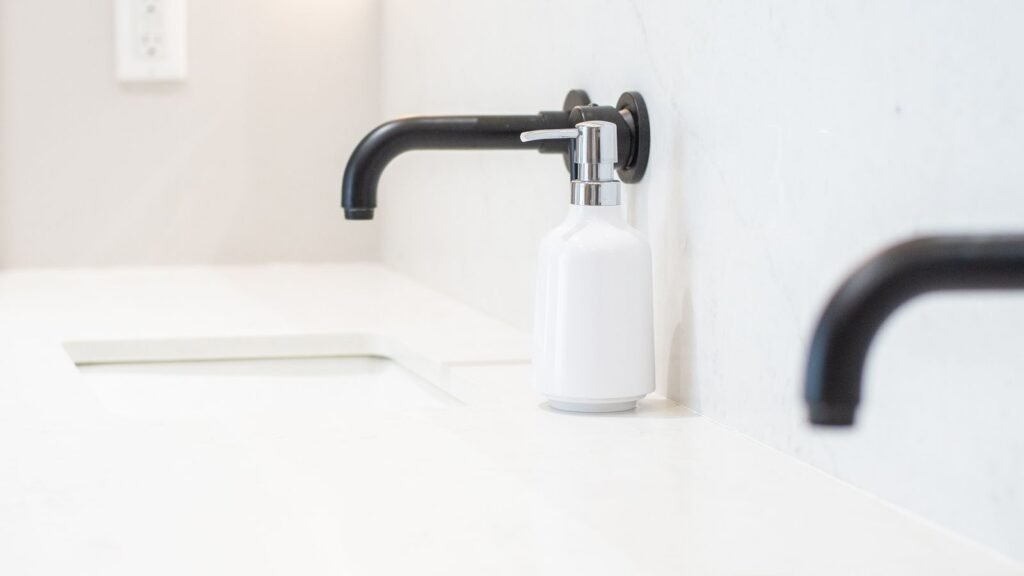
Record the soap, paper and drying arrangements actually installed. Identify their owner or service contact and retain relevant operating information. A dispenser supplied under another contract may have requirements that should be clarified before staff or a cleaner handles it.
Specify the permitted replenishment method and the stock compatible with the equipment. Do not assume a different bottle, roll or refill fits merely because it looks similar. The provider or equipment owner should confirm the appropriate items.
Keep cleaning the exterior separate from repairing the mechanism. A damaged dispenser, broken lock or failed dryer should be reported through the named service route. A cleaning task does not imply permission to dismantle electrical equipment or alter a fitting.
Make purchasing responsibility explicit
Name the person or provider who orders each consumable. Give that responsibility an agreed process rather than expect the cleaner to buy supplies informally whenever a cupboard looks low. The office should know what is supplied and who approves a change.
Identify where deliveries are received and stored. A supply arriving while the office is closed needs a defined arrangement. The cleaning team should not be expected to locate an unknown parcel or transfer stock from another occupier without approval.
Compare supply quotations against the same item and delivery request. A price for a refill differs from one that includes equipment provision or another service. Resolve those boundaries before treating totals as directly comparable.
Agree how stock is checked
List the stock available on site and the location the authorised people may access. Decide who checks it, how a shortage is reported and who responds. A cleaning attendance can identify that an item is unavailable without having authority to order it.
Keep the report specific. Identify the product, location and condition instead of a broad note that supplies are low. The purchasing contact can then decide what is needed without asking the cleaner to substitute an unfamiliar item.
Review stock against actual use and delivery arrangements. There is no universal quantity that suits every office. Changes in occupation or equipment may require the workplace manager to revise the supply plan.
Define replenishment within the cleaning round
If a cleaning provider accepts replenishment, name the items and source stock in the specification. Confirm when the task happens and what is recorded when the correct item is missing. A restocked tick should describe a task actually completed.
Tell the team about dispenser instructions, keys and access restrictions. A locked or damaged unit should not be forced open to finish a checklist. Report the condition and follow the authorised response.
Keep exterior cleaning and replenishment clear as individual tasks. A dispenser can be clean but empty, or stocked while its exterior needs attention. The office manager should be able to see which condition was checked without inferring both from one vague line.
Keep sanitary-unit services separate
Identify the arrangement covering sanitary units and any associated collection or servicing. The relevant provider should define its accepted tasks, access requirements and record. Cleaning the surrounding floor does not imply emptying or servicing that unit.
Tell the cleaning team which items belong to that arrangement and who receives a report about an apparent problem. The team should not open an unfamiliar unit or transfer its contents as an unspoken part of routine waste removal.
If the workplace wants a different arrangement, settle it with the responsible provider before changing the cleaning scope. Keep the accepted service boundaries visible so a missed collection and an omitted cleaning task receive the appropriate response.
Assign ordinary waste tasks clearly
List the ordinary bins included in the cleaning work and the agreed process for removing their contents. Specify the supplies used and where permitted waste goes. Do not assume every container in a washroom belongs to the same waste stream.
Provide site instructions for an unexpected or unidentified item. The team should report it and obtain the appropriate decision rather than combine contents casually to make the room look empty. The method must follow the actual material and accepted arrangement.
Keep the bin exterior and surrounding surfaces in the cleaning specification where agreed. Emptying a bin does not automatically include every detail-cleaning task, and another provider’s service record should not be treated as proof that the floor around it was cleaned.
Plan checks between cleaning visits
An evening cleaning round does not provide continuous daytime monitoring unless that service is agreed. Name the workplace contact who receives a report of a shortage, spill or unavailable facility while the contractor is away.
Decide whether another accepted attendance is required for the office’s use pattern. Frequency should follow condition and occupation rather than an invented rule for every workplace. Record the responsibility for each check, not merely the time of the main clean.
The wider commercial cleaning scope can coordinate accepted room tasks with the rest of the office. Keep supplier delivery and specialist-service attendance distinct so each provider knows where its responsibility begins and ends.
Connect the specification with workplace welfare
The Health and Safety Executive’s workplace health, safety and welfare guide is written for managers and outlines basic workplace facilities and maintenance matters. A washroom cleaning and supply plan belongs within that wider management of the premises.
Keep repairs, facility availability and equipment servicing with the appropriate responsible people. A cleaning completion record should not be represented as certifying the whole workplace’s compliance. It records accepted tasks and the exceptions observed.
Supply relevant site and product information to the cleaning provider. The team should use methods suitable for the surfaces and accepted tasks, rather than an unidentified chemical left by another supplier. The washroom specification should make those boundaries understandable.
Use one responsibility list for all providers
Create a practical list showing each task, its responsible party, access requirement and reporting contact. It can cover cleaning, replenishment, procurement, equipment servicing and specialist attendance while preserving their separate agreements.
Do not make one provider sign for another’s task. A cleaner can report an apparent missed service but should not confirm a collection it did not witness. Likewise, a delivery receipt does not establish that dispensers were replenished after the stock arrived.
Keep the current version available to the office contact and relevant providers. When equipment, occupancy or suppliers change, update the affected task and contact details. A responsibility list is useful only when it reflects the arrangement actually in place.
Check the finish and resolve the right problem
Review accepted cleaning surfaces and replenishment tasks against the specification. Identify a missing item, inaccessible dispenser or service exception clearly. A broad washroom tick should not conceal one of those conditions.
When a concern arises, identify whether it is a cleaning omission, unavailable stock, equipment fault or another provider’s attendance. Those require different responses. The workplace contact can use the responsibility list to reach the appropriate person.
Keep changes to tasks and supplies agreed before work begins. A new dispenser or different collection arrangement may affect the cleaning route or preparation. Confirm the revised boundary rather than leave it to staff to discover during a busy day.
Questions about office washroom services
Does the cleaner supply soap and paper automatically?
Check the agreement. Supplying stock and replenishing from office-provided stock are different tasks.
Does cleaning include sanitary-unit servicing?
Do not assume it. Identify the responsible provider and the accepted service separately.
Can one checklist record everything?
It can coordinate responsibilities, but each completion entry should describe a task the responsible party actually carried out.
Make each washroom responsibility visible
Gather the surface list, equipment information, stock plan and provider contacts. Discuss your office washroom cleaning requirements with Exclusive Property Facilities so the accepted tasks, replenishment boundary and reporting route are clear.

Want this done properly at your property?
Tell us the building and the problem. We quote from a written specification, and contracts start with a three-month trial rather than a long tie-in.