A Workplace Washroom Hygiene Guide for Manchester Businesses
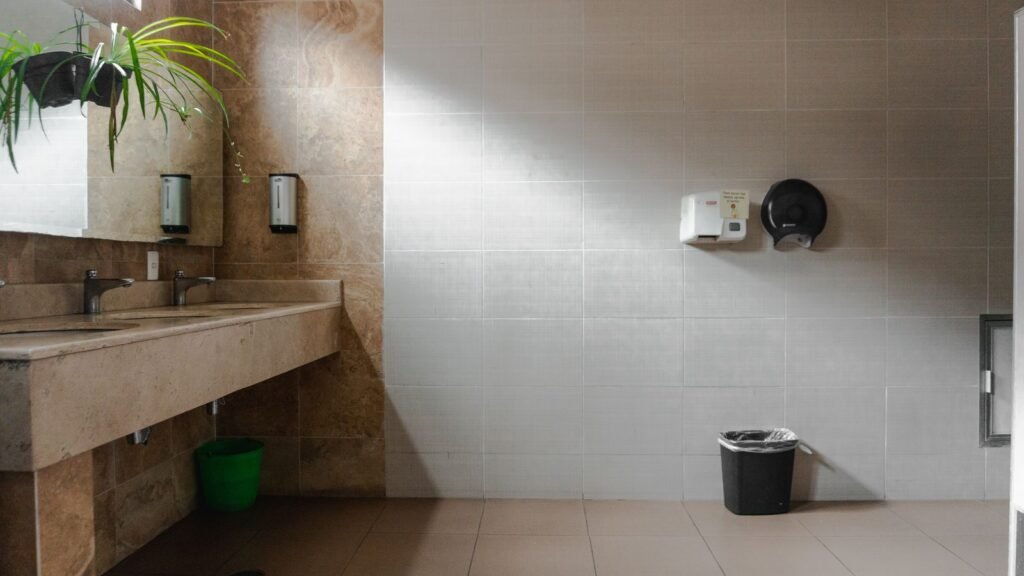
No room in a workplace is judged faster or more harshly than the washroom. Staff use it several times a day and read its condition as a statement of how much the business values them. Visitors use it once and quietly extend its condition to everything else about the company, and hospitality businesses know the brutal version of this rule, which is that customers who doubt the washroom doubt the kitchen. The washroom is small, unglamorous and absolutely central to how a premises feels, and it is also, from a hygiene standpoint, the most demanding room in the building to keep genuinely clean.
The demanding part is the point. Washrooms combine moisture, heavy shared use, high-frequency touch points and odour potential in one small space, and they punish superficial cleaning within hours. A washroom that looks and smells right at four in the afternoon is running on a system, not a morning wipe-down. This guide sets out that system for Manchester businesses, from the daily discipline through to the periodic deep work, and explains what a professional specification should contain.
Why Washrooms Fail Faster Than Any Other Room
A washroom degrades on a cycle measured in hours. Every use adds moisture to the air and surfaces, touches to the door, taps and dispensers, and traffic to the floor. Moisture plus warmth grows the microbial film that causes odour, especially around toilets, urinals, drains and the grout lines that hold on to everything. Hard water leaves limescale on taps, in bowls and around urinals, and limescale is not just cosmetic, its rough surface harbours the deposits that smell. Paper dust, hair and floor soiling accumulate visibly by mid-morning in a busy building.
This is why frequency beats intensity in washroom care. One heavy clean at six in the morning cannot hold a busy washroom until evening, while a proper morning clean plus brief midday and afternoon checks holds it easily. The businesses with reliably pleasant washrooms are almost never doing more total cleaning than everyone else, they are distributing it correctly across the day.
The Daily Routine, Done in the Right Order
Professional washroom cleaning follows a sequence, high to low, clean to dirty, dry to wet, so that the cleanest surfaces are handled first and the toilet is always last. A proper daily service covers a consistent list.
- Dispensers restocked and their exteriors cleaned, soap, paper, hand towels or dryer surfaces
- Mirrors and glass polished, sills, ledges, partition tops and pipework dusted
- Basins, taps and vanity surfaces cleaned and disinfected, with limescale kept in check
- Touch points disinfected deliberately, door handles and plates, lock snibs, flush plates, taps, dispenser levers and light switches
- Cubicle partitions and doors spot-cleaned inside and out, where hands actually go
- Toilets and urinals cleaned and disinfected inside, outside, seats both sides, hinges and the floor around them
- Bins emptied, cleaned and relined, with sanitary units serviced under whatever arrangement covers them
- Floors swept and disinfectant-mopped last, working back to the door, with wet floor signage used properly
Colour-coded cloths and equipment are non-negotiable in this room, washroom-only, and within that, separate for toilets versus basins, because a cloth that travels from toilet rim to tap handle manufactures the exact cross-contamination the cleaning exists to prevent. The professional cleaning industry codifies this kind of practice in its training and standards work, and the global industry body ISSA maintains standards, training and certification frameworks that underpin how serious cleaning operations approach washroom hygiene and measure cleaning outcomes.
Touch Points, Where Hygiene Is Actually Won
Most washroom-borne illness transmission travels by hand, not by air, which means the surfaces that matter most are the ones every user touches in sequence, the cubicle lock, the flush, the tap, the dispenser, the door on the way out. These deserve disinfection at every visit, including the brief midday checks, and they benefit from dwell time, meaning disinfectant left on the surface for the minutes its label requires rather than sprayed and instantly wiped, a detail that separates trained cleaning from theatre.
Design and supply choices help at the margin, and where a business controls them, they are worth the thought. Well maintained soap and drying provision matters more than which technology is chosen, because the hygiene chain only works if users can complete it. A washroom that runs out of soap by two o’clock is failing at hygiene regardless of how clean its floor is, which is why restocking sits inside the cleaning specification rather than beside it.
Odour, the Complaint That Signals Everything Else
Odour is never the problem, it is the symptom. Persistent washroom smell comes from specific reservoirs, urine deposits in grout and at the floor-to-pedestal junction, scale build-up inside urinal traps and toilet rims, biological film in floor drains that dry out and release smell, and mop heads and cloths that were never laundered properly and reintroduce yesterday’s bacteria each morning. Air fresheners layered over these reservoirs produce the distinctive perfumed-washroom smell that every user correctly decodes as a cover-up.
The fix is always at the source, descaling programmes for traps, bowls and urinals, periodic machine scrubbing of floors and grout, drain maintenance including simply flushing water through little-used floor drains, and strict laundering rotation for cleaning textiles. A washroom cleaned this way needs no masking at all, and neutral is exactly the smell a well run washroom should have.
Ventilation completes the picture. Extractor fans that actually run, and whose grilles are cleaned rather than left to felt over with dust, keep humidity down, dry the room between uses and carry odour out at the rate it is produced. A washroom with dead air will defeat even a good cleaning routine, so if the room never seems to dry, the conversation to have is with whoever maintains the building’s ventilation as much as with the cleaning team.
The Periodic Layer, What Daily Cleaning Cannot Reach
Even a perfect daily routine leaves a slower accumulation that needs scheduled deeper work. Grout lines darken and hold odour, and respond to periodic machine scrubbing or steam. Limescale advances on tiles, screens and fittings faster than daily wiping can hold it in hard-pressed washrooms. Extractor grilles clog with dust, which raises humidity and slows the whole room’s drying cycle. High-level surfaces, light fittings and ceiling edges collect the film that makes a washroom feel dingy even when it is clean at eye level. Partitions, tiles and doors need full washing rather than spot cleaning a few times a year.
A sensible specification schedules this layer monthly or quarterly by traffic, and folds it into the wider premises programme alongside jobs like communal area cleaning, so the whole building moves on one maintained standard rather than islands of attention. Businesses that inherit tired washrooms usually start with a one-off deep clean to reset the room, then let the daily and periodic layers hold the new baseline.
Getting the Specification Right
Washroom problems in managed buildings are usually specification problems. A vague line reading washrooms cleaned daily hides every decision that matters. A working specification names the frequency of full cleans and check visits, lists the touch points explicitly, assigns restocking responsibility, defines the descaling and deep cleaning cycle, and states how the standard is checked, whether by supervisor inspection, photographic reporting or client walk-rounds. It should also flex with the building’s rhythm, because a city centre office’s washrooms on a Thursday and a quiet Friday need different service levels, and a good commercial cleaning provider will build that shape into the schedule rather than charging flat for a flat routine. Our cleaning guides include more material on specifications and standards if you are reviewing a contract.
Traffic data, even informal traffic data, sharpens a specification quickly. A washroom serving thirty office staff, a customer washroom in a busy cafe and the facilities in a warehouse running shifts around the clock are three different service problems wearing the same tiles. Counting realistic daily uses per washroom, and noting when the peaks fall, lets the check visits land where they earn their keep, mid-morning and after lunch in most offices, continuously through trading hours in hospitality, and at shift changeovers in industrial sites. Specifications built this way cost little more than flat ones and perform visibly better, because the cleaning arrives just ahead of the need instead of hours behind it.
Washrooms Your Staff Stop Noticing
The end state worth aiming for is a washroom nobody talks about, stocked, neutral-smelling, visibly clean at four in the afternoon, and simply not a topic. Getting there is a matter of system rather than heroics, the right daily sequence at the right frequency, touch point discipline, source-level odour control and a scheduled periodic layer. Exclusive Property Facilities delivers washroom cleaning across Manchester as part of its commercial cleaning work, with explicit specifications, trained staff and standards you can inspect on any visit. If your washrooms are letting the rest of the building down, get in touch for a quote and we will put a proper system behind them.

Want this done properly at your property?
Tell us the building and the problem. We quote from a written specification, and contracts start with a three-month trial rather than a long tie-in.