What a Domestic Deep Clean Includes, Room by Room
What separates a deep clean from a regular one
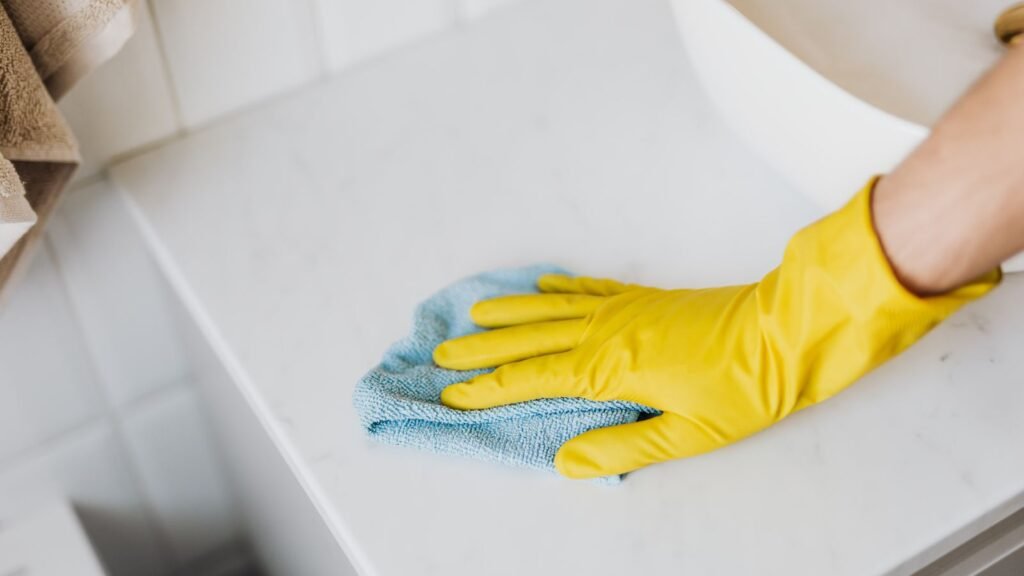
Our piece on the signs a home needs a deep clean covers how to spot when a property has reached that point. This one is the other half of that question, what actually happens once you book one, room by room, so there is no vague idea of what you are paying for. A regular clean maintains what is already reasonably clean. A deep clean goes after everything that a weekly routine never reaches, behind and under things, inside appliances, the build up in corners and along skirting that only shows itself once it has been there for months. It is a different job with a different scope, not simply a more thorough version of the usual visit.
Kitchen
The kitchen is where a deep clean earns its cost fastest, because it is the room where grease, food residue and appliance build up accumulate invisibly behind a surface that still looks fine on a quick wipe. Inside the oven, including the door glass between the panes where fitted, gets degreased properly rather than surface wiped. The extractor fan filter is removed and cleaned rather than left to keep recirculating grease laden air. Behind and underneath the fridge and other movable appliances, an area a weekly clean almost never reaches, gets cleared of dust and any spilled residue. Cupboard fronts, handles, the inside of the microwave, and the grout lines on a tiled splashback all get individual attention rather than a single pass with an all purpose spray.
Bathroom
Bathrooms hide their build up in grout, seals and the parts of a suite that do not get touched during a quick wipe round. Grout lines between tiles are scrubbed rather than sprayed and left, and any early mould or mildew in the shower seal or around the bath gets treated directly rather than masked with a fresh coat of spray cleaner. Limescale around taps, the shower head and the base of the toilet is removed with a proper descaling product rather than a general bathroom spray that only shifts surface marks. Extractor fan covers, which collect a surprising amount of dust given they are rarely looked at, get wiped down, and skirting boards and the base of the bath panel, both areas that trap dust and hair over time, are cleaned properly rather than skipped.
Living areas
A living room deep clean goes well beyond hoovering the visible carpet. Furniture gets moved, or pulled out far enough to clean behind and underneath, an area that collects more dust and debris than most people expect between deep cleans. Skirting boards throughout the room are wiped down properly rather than only where they are obviously marked. Light switches, door handles and other frequently touched surfaces get individual attention, since these are exactly the points a weekly clean tends to skim over. Curtains or blinds, radiators, and the tops of picture frames or shelving units, all classic dust traps that sit above eye level, are included as standard rather than left for another visit.
Bedrooms
Bedrooms accumulate dust in places that are easy to overlook during a normal tidy up. Under the bed, one of the least disturbed spaces in most homes, gets properly cleared and vacuumed. Wardrobe tops, which collect a layer of dust that only becomes obvious once you actually look, are wiped down. Skirting boards and window sills throughout the room get the same treatment as the rest of the house, and mattress vacuuming, using an upholstery attachment to lift dust and skin cells from the surface, is worth including on a deep clean even where the mattress itself is not being deep cleaned separately.
Hallways, stairs and the connecting spaces
Hallways and stairs take more daily footfall than almost any other part of a home, and it shows in skirting boards, stair rods or the edges of stair carpet where grip and dirt build up together. Banisters and handrails, touched constantly and rarely cleaned properly, get wiped down as part of the same visit, along with light switches and door frames along the route. These are small individual tasks but they are exactly the kind of detail a regular weekly clean has neither the time nor the scope to cover.
Windows and the details that get missed
Window sills and frames, especially where condensation has been an issue through colder months, collect dust and grime that a general clean rarely addresses directly. Internal glass gets cleaned properly rather than a quick spray and wipe, and any accessible external glass at ground floor level is included where it forms part of the job. Skirting boards, already mentioned room by room above, deserve their own note here because they are the single most consistently missed surface in an ordinary cleaning routine, running the full length of every room and picking up dust that settles and compacts over weeks.
Decluttering as part of the process, not a separate job
A thorough clean and a proper sort out tend to happen at the same time in practice, because moving furniture, clearing surfaces and reaching into corners naturally turns up things that have not been dealt with in a while. Recycle Now, the UK’s national recycling advice service, makes exactly this point in its guidance on recycling as you declutter and spring clean, recommending that a big clean be tackled in stages, decluttering first, then rehoming or recycling what is no longer needed, then deep cleaning each area once it is genuinely clear. That order matters. Cleaning around clutter rather than through it means surfaces, floors and the corners behind furniture never get properly reached, which defeats a good share of the point of booking a deep clean in the first place.
How long it actually takes
A full deep clean of an average two or three bedroom home typically runs longer than most people expect the first time they book one, often the better part of a working day for a single cleaner, less with a small team working through rooms in parallel. The variables that matter most are how long it has been since the last deep clean, how much furniture needs moving rather than working around, and whether the kitchen and bathroom are being fully degreased and descaled or given a lighter pass. A property that has never had one, or has gone well over a year, generally takes noticeably longer than one on a regular six monthly schedule.
Utility rooms, garages and the spaces that get forgotten entirely
Utility rooms, garages and box rooms tend to fall outside every regular cleaning routine simply because they are used for storage rather than living, which means dust, cobwebs and general grime build up there for far longer than anywhere else in the house before anyone notices. A deep clean is usually the first time these spaces get properly cleared, swept and wiped down in months, sometimes longer. Shelving, the top of a washing machine or tumble dryer, and skirting around stored boxes all collect a surprising amount of dust given how rarely the room is disturbed, and clearing it properly here has the same knock on benefit as decluttering elsewhere in the house, less clutter means the room can actually be cleaned properly next time rather than worked around again.
Where it fits against a regular cleaning routine
A deep clean is not a replacement for a weekly or fortnightly routine, it is what resets a home to a proper baseline before regular cleaning can keep it there without constantly falling behind. Our weekly domestic cleaning routine guide covers what should happen in the gaps between deep cleans, and most homes benefit from a full deep clean every six to twelve months depending on occupancy, pets and how much that weekly routine already covers. Booking one before a big change, moving in, a change of season, or after a period where regular cleaning slipped, is usually when it earns the most value.
What to expect on the day
A team arriving for a booked deep clean will usually work through a property in a fixed order, kitchen and bathroom first while product dwell times do their work, then living areas and bedrooms, then the connecting spaces last. Having the property reasonably clear of personal clutter before the team arrives, surfaces free of ornaments and clothes off the floor, means the time booked goes on cleaning rather than tidying around belongings. It is worth flagging anything specific in advance too, a fabric with a strict cleaning code, a particular allergy in the household, or an area that needs special care, so the team can plan for it rather than discover it partway through the visit.
Book a deep clean across Manchester
We carry out full room by room deep cleans across Manchester homes, covering everything above as a single visit rather than a patchwork of add ons. If it has been a while since your home had one, or you are simply not sure what a deep clean actually includes versus a normal visit, get in touch and we will talk through what your home specifically needs.

Want this done properly at your property?
Tell us the building and the problem. We quote from a written specification, and contracts start with a three-month trial rather than a long tie-in.