A Landlord’s Pre-Winter Maintenance Checklist for Manchester Rentals
Prevention is the whole strategy
Our guide to landlord repair responsibilities covers what you are legally required to fix and how quickly once something has already gone wrong. This piece is about the visit that happens before that call comes in, the practical walk round every rental property should get in September or early October, aimed squarely at stopping the emergency call outs that make winter expensive rather than reacting once they land. None of what follows is about legal duty. It is about the difference between a landlord who spends October catching up on breakdowns and one who spent an afternoon in September getting ahead of them. The properties that generate the fewest winter call outs are, almost without exception, the ones where this walk round happens every single year rather than only after a bad winter prompts it.
Heating, first and most urgent
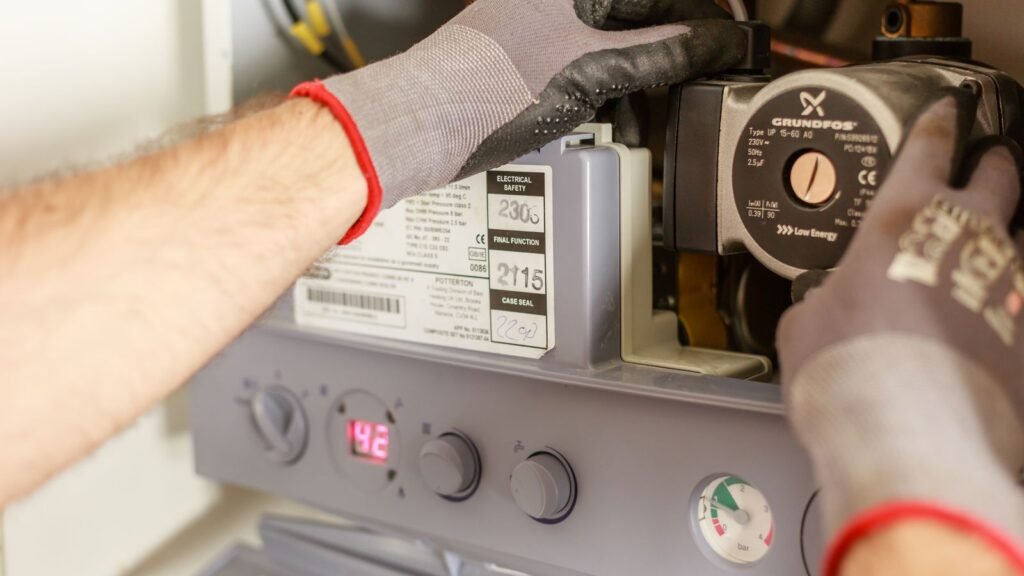
A boiler that has not been serviced since last year’s gas safety check is the single biggest risk on this list, because heating failures are the fastest route to an emergency call out, the least forgiving of a slow response, and the one tenants will escalate quickest when the temperature drops. Book the annual gas safety check and service together rather than treating them as separate events, since a service catches efficiency and pressure issues that a bare safety check does not always flag. Bleed radiators across the property so the system heats evenly rather than leaving cold spots that get blamed on the boiler when the real issue is trapped air. Check the system pressure is within the range the boiler manual specifies, and leave clear instructions with the tenant on how to top it up themselves if it drops, since a huge share of winter no heat call outs turn out to be a pressure issue any tenant could fix in two minutes with the right guidance.
Seals, draughts and the small jobs that add up
Window and door seals perish gradually and rarely get noticed until a tenant complains about a cold room or a draught they cannot locate. Check the seals around external doors and windows on the autumn walk round, and reseal or replace anything visibly perished rather than waiting for a complaint. Loft hatches are commonly overlooked in this check despite being one of the largest single sources of heat loss in a property when the seal has gone or the hatch does not close properly. These are inexpensive jobs individually, and collectively they are the difference between a property that holds heat efficiently through winter and one that leaks it constantly, driving up a tenant’s bills and driving up your call out volume at the same time.
Gutters, roofline and anything water related
A blocked gutter overflowing against a wall through a wet Manchester autumn is one of the most common routes water finds its way into a property that otherwise has no obvious defect. Clear gutters and downpipes of the season’s leaf fall, and check for any visible sagging, cracked jointing or plant growth on the roofline while you are up there. This overlaps with general exterior maintenance, but it earns a specific mention on a landlord’s checklist because water ingress from a neglected gutter is one of the most expensive categories of repair a landlord will face, and one of the most preventable.
Smoke alarms, carbon monoxide alarms and the checks that are not optional
Test every smoke alarm and carbon monoxide alarm in the property, not just visually check they are present. Replace batteries as a matter of course during the autumn visit rather than waiting for a low battery warning to be reported, and confirm alarms are fitted in every location the law requires, every storey used as living accommodation for smoke alarms, and any room with a fixed combustion appliance other than a gas cooker for carbon monoxide alarms. This is the one part of the checklist where the line between good practice and legal minimum genuinely overlaps, and it takes minutes to confirm properly.
Taking tenant reported damp seriously at this point in the year
Any damp or condensation report that comes in during September or October deserves more attention than the same report in July, because early autumn is exactly when condensation related issues begin and exactly when catching a cold bridge or a ventilation problem early prevents a full winter of worsening mould. A tenant mentioning a damp patch or a persistently misted window now is giving you an early warning, not a minor complaint to file away. Investigate promptly rather than assuming it will resolve on its own once the heating goes on properly, since in a genuine number of cases the issue traces back to a building defect that heating alone will not fix.
What the wider housing profession recommends
The Chartered Institute of Housing, the professional body for people working across housing management in the UK, makes the same underlying case at a sector level. Its work on rethinking repairs and maintenance argues for planned, proactive maintenance over a purely reactive, break fix approach, on the basis that catching problems before they fail costs less, causes less disruption to residents, and produces a far more predictable workload than waiting for the emergency call. A private landlord running one property or a handful is operating at a completely different scale to a housing association, but the underlying logic transfers directly, a scheduled autumn check is planned maintenance in miniature, and it is cheaper in every sense than the reactive alternative of waiting for October and November to tell you what needs fixing.
Insulation as the item that gets deferred longest
Loft and cavity wall insulation rarely make an autumn checklist because they are less visible than a boiler fault or a blocked gutter, but poor insulation is very often the underlying reason a property struggles with cold complaints, high tenant energy bills and condensation all at once. If your autumn walk round turns up any of these symptoms repeatedly across a property, it is worth checking the insulation itself rather than treating each symptom separately. Our insulation services across Manchester page covers what an assessment and upgrade involves if that turns out to be the real gap. A loft insulation top up in particular is quick to fit, relatively inexpensive against the size of the problem it solves, and often the single change that stops a run of separate winter complaints, cold bedrooms, high bills, misted windows, that a landlord has otherwise been treating as three unrelated issues.
Outdoor taps, pipework and freeze risk
Exposed pipework and outdoor taps are easy to miss on an autumn walk round because nothing is wrong with them yet, but a hard frost later in the year can split a pipe that was never lagged, and the resulting leak is often discovered too late rather than during the freeze itself. Check any pipework that runs through an unheated garage, loft space or external wall, fit or replace lagging where it is missing or has degraded, and turn off and drain any outdoor tap that will not be used again until spring. This is one of the cheapest items on the whole checklist to address and, when it is missed, one of the more expensive and disruptive to repair once a pipe has actually burst.
Keeping a record that holds up later
A landlord managing more than one or two properties benefits from more than just carrying out the checklist, the record of having done it matters almost as much as the visit itself. Dated photographs of the boiler service, the gutter clearance and the alarm test give you something concrete if a tenant later disputes when a repair was reported or if an insurer asks what preventive maintenance was in place before a claim. A simple spreadsheet with one row per property and a column for each item on this checklist is enough. What matters is that it exists and gets updated every autumn, not that it is sophisticated.
Putting the checklist into a single visit
Every item above can realistically be checked in one visit to a standard rental property, provided the checklist itself is written down and followed rather than improvised on the day. Landlords managing several properties benefit most from treating this as a scheduled autumn round across the whole portfolio, done in the same order at every address, rather than something that happens ad hoc at whichever property complains first. A documented visit, with photographs and dates, also gives you a record worth having if any dispute about the property’s condition ever comes up later.
If a fault turns up during the walk round that goes beyond a quick fix, our guide to landlord repair responsibilities in the UK sets out what you are required to act on and the timescale that counts as reasonable.
Get your properties checked before the cold arrives
We carry out scheduled pre-winter maintenance visits across Manchester rental portfolios, covering everything in this checklist as a single coordinated visit with a written record for every property. If your properties have not had this year’s check yet, get in touch now while there is still time to act before the temperature genuinely drops.


Want this done properly at your property?
Tell us the building and the problem. We quote from a written specification, and contracts start with a three-month trial rather than a long tie-in.