Meeting Room Cleaning Between Bookings
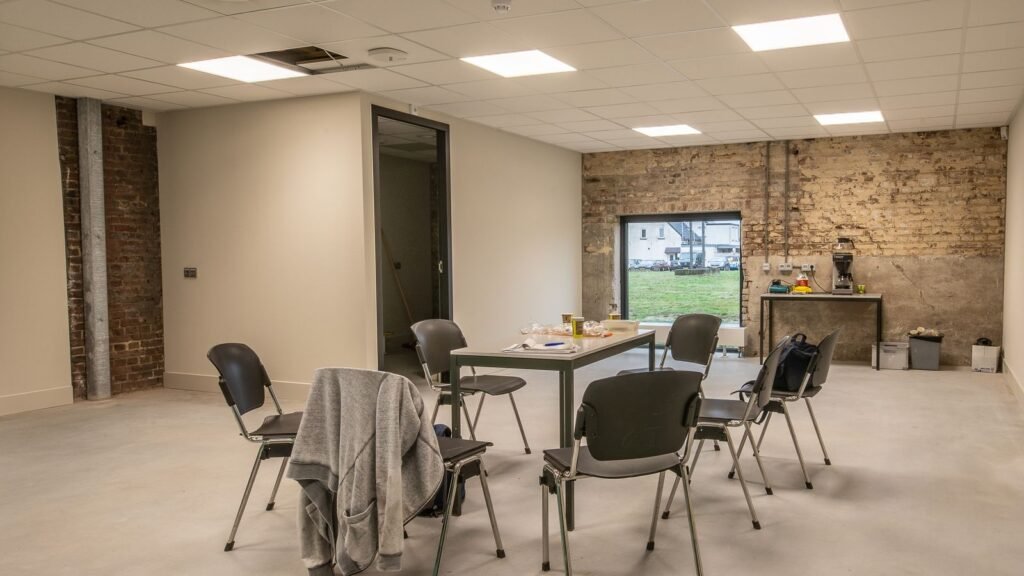
Meeting room cleaning between bookings should leave the room ready for the next group without pretending that a quick reset is a full nightly clean. Assign someone to clear refreshments, check the table and chairs, deal with visible soiling and report anything that prevents the room being used. Agree separately who carries out the deeper floor and surface work.
This guide is for office managers arranging meeting room cleaning in Manchester. It explains how to connect the booking calendar with the cleaning tasks, protect shared screens and equipment, and avoid the gap where a room looks free in the diary but still contains the last meeting’s cups and paperwork.
Define the reset and the planned clean
A reset deals with the immediate handover between groups. It might include removing used cups, clearing agreed waste, wiping an available table by the permitted method and restoring the seating layout. The planned cleaning round addresses the fuller scope at a suitable time, including the floor, accessible furniture surfaces and agreed periodic tasks.
Write down the difference. If the contracted cleaner attends only in the evening, it cannot be assumed that the same service covers a lunchtime handover. If daytime cleaning is required, specify it and ask the provider whether it can be supplied. The office team needs an alternative arrangement for bookings outside the cleaner’s attendance window.
Our office cleaning in Manchester service page can help you start that scope discussion. Give the provider the meeting room layout and booking pattern, including whether a daytime reset or only the planned round is being requested.
Connect the booking diary to the work
Look at the interval between meetings. A room booked continuously may have little opportunity for cleaning or a layout change. Decide what time must be reserved for the agreed reset and how that interval appears in the diary. Do not allocate the same minute to a departing group, a cleaner and the next attendees.
Identify the person who tells the reset team a meeting has finished or run late. A booking system can show the planned end time, but that does not establish that the room is empty. Give the team a way to confirm access and a route to report a room that cannot be made ready in the expected window.
For shared rooms, state who controls the calendar and who can change it. If several departments book independently, they should use the same handover rules. A cleaner should not have to negotiate with the next group about whether the room can remain unavailable for an agreed task.
Clear the table without moving confidential work
Ask meeting organisers to remove their own papers, laptops and personal items before leaving. The reset team can then see the agreed table surface. Do not instruct cleaners to sort documents or decide which papers are waste. Confidential material should have a clear owner and handling arrangement.
If something has been left, record or report it according to the office’s lost-item procedure. A room-ready record can show that the table was unavailable because papers remained, rather than claim it was cleaned fully. The office contact can arrange their removal and decide when the remaining task can be completed.
Describe the table finish and the permitted cleaning method. A laminated surface, polished timber or a specialist finish may have different care instructions. Use a suitable product according to its label and the surface guidance. A convenient spray from another room is not automatically appropriate for the meeting table.
Make refreshment tasks explicit
Refreshments can leave a room looking unfinished even when the main table is clean. Identify who removes cups, plates, bottles and leftover food, and where each item goes. The cleaner should not have to guess whether a plate is being kept for the next group or abandoned by the previous one.
Specify the refreshment point included in the reset. This may be a counter, tray or kettle area inside the room. Equipment care and replenishment should be agreed separately where necessary. Cleaning the outside of a coffee machine is not permission to open it or perform a maintenance procedure.
List the supplies that are checked and who replaces them. Drinking water, cups or other items offered by the office may be outside the cleaning contractor’s normal scope. A named owner prevents both the office team and cleaner assuming the other person has refilled them.
Handle screens and controls by their care instructions
Meeting rooms may contain display screens, touch panels, remote controls, microphones and connection points. Identify who owns the equipment and obtains the manufacturer’s cleaning instructions. Cleaning staff should receive the agreed method before touching it, rather than learn by trying a product on the first visible mark.
Distinguish the screen surface from nearby furniture. Do not spray a product into a device or disconnect equipment to reach an area unless that work is specifically authorised and assessed. Personal laptops and other attendee-owned devices should remain with their owners under the office’s arrangements.
If liquid has entered a device, report it to the equipment owner or IT contact. A reset is not a repair or electrical inspection. The room should be reviewed before the next group relies on affected equipment, rather than a cleaner being asked to make it work as part of tidying.
Check chairs and the immediate floor area
Agree the seating layout the next group needs. Moving a chair back into position and cleaning its hard touch surfaces are different tasks, so specify both where required. Fabric seats, plastic arms and adjustment controls may need different methods. Follow the relevant material instructions instead of applying the same product to every part.
Look for visible debris around the meeting table and refreshment point. A small area of dropped crumbs may be a reset task, while a full floor clean belongs in the planned round. Write down that boundary so the team knows what to handle and what to report for later attention.
A spill on the floor needs a safe response before the next meeting. Keep people clear under the office’s agreed arrangements and refer the task to the person authorised to handle it. Do not simply move chairs over the area or leave a wet surface because the diary shows the room is due to reopen.
Keep hand hygiene separate from room presentation
A room that looks tidy still relies on people following workplace hygiene arrangements. Do not describe a reset as making the room germ-free or as a guarantee against illness. The cleaning brief should identify what is cleaned and how, rather than attach an unsupported health promise to a completed checklist.
The NHS norovirus guidance advises washing hands with soap and water and says alcohol hand gels do not kill norovirus. A supply of hand gel in a meeting room should therefore not be treated as a substitute for the relevant handwashing advice.
If illness affects a meeting or an attendee reports a condition that changes the cleaning need, pass the relevant information privately to the office contact. Review whether the required work is within the team’s scope and competence before attendance. An ordinary room reset should not be presented as a specialist infection-control service.
Give the nightly clean its own scope
The planned round should cover the areas and tasks that can be completed when the room is available. Specify accessible table surfaces, chairs, waste points and flooring. Include any agreed detail work and its frequency. A room used occasionally may need a different plan from one with continuous bookings.
State what must be cleared before the visit and which surfaces are excluded. If equipment, papers or locked storage prevent access, the record should show the exception. The cleaner cannot complete a uniform task across every table if some remain covered with confidential work.
Our broader commercial cleaning in Manchester service can be discussed around those scheduled tasks. Keep the specification tied to rooms, surfaces and attendance rather than assuming a general contract includes every between-meeting requirement.
Use a short room-ready record
A practical record identifies the room, time, tasks completed and any exception. It can tell the office team that cups were cleared, the accessible table was cleaned and a device concern was referred to IT. It should not sign off work the team did not see or certify equipment performance.
Decide who checks the room before a sensitive or important booking. The room-ready record supports that check but does not replace it. A layout change, missing item or late departure may still require action by the office organiser after the cleaning task is complete.
Review repeated exceptions. If papers keep preventing the table clean, revise the departure instruction. If refreshments cannot be cleared within the gap, change the service arrangement or booking interval. Resolve the particular issue instead of adding more boxes to a form that does not change the work.
Questions about meeting room cleaning
Does an evening cleaning contract cover lunchtime resets?
Only if that attendance and work are agreed. Give the provider the actual booking times and ask what daytime support can be supplied. Assign another person to cover gaps.
Should cleaners remove meeting papers?
Organisers should remove their own documents. Any separate document-handling arrangement must be explicit, particularly where confidential information may be present.
Can the same cleaner be used on the table and display?
Do not assume the product suits both. Follow the material and device care instructions and give the team the approved method for each surface.
Is a quick reset the same as a deep clean?
No. A reset addresses the immediate handover. The planned clean covers the fuller agreed scope at a suitable access time, with periodic detail tasks arranged separately.
Plan the handover around real bookings
Identify the room, the time between groups, the surfaces and equipment involved, and who handles refreshments. Send Exclusive Property Facilities your meeting room requirements so daytime tasks and the scheduled cleaning round can be considered as clear parts of the scope.

Want this done properly at your property?
Tell us the building and the problem. We quote from a written specification, and contracts start with a three-month trial rather than a long tie-in.