Office Glass Partition Cleaning in Manchester Without Disrupting Work
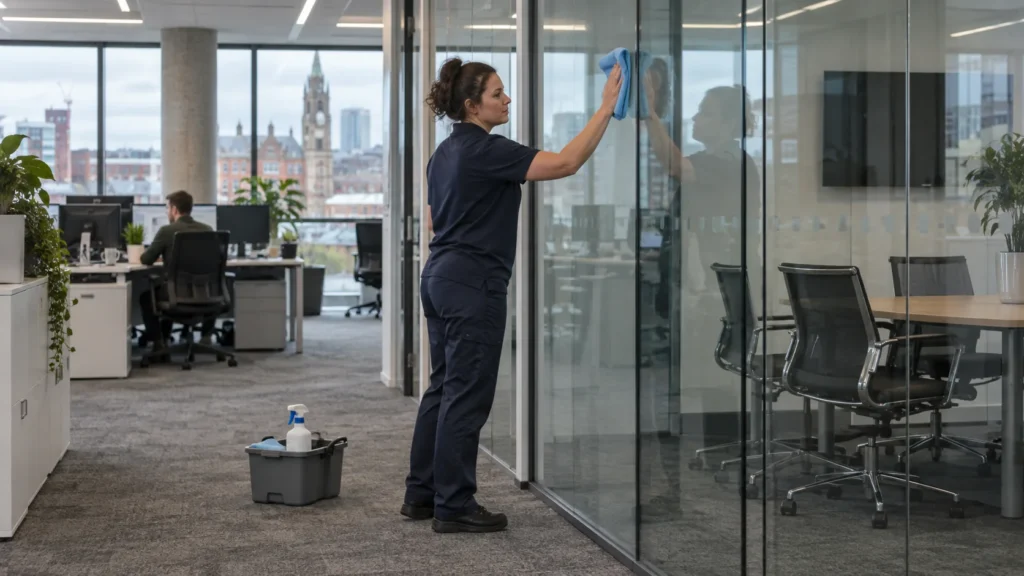
Glass meeting-room walls can make a Manchester office feel bright and open, but they also put fingerprints, dust and streaks exactly where staff and visitors look. A panel may be clean at 8 am and marked again after the first meeting. The answer is not simply to wipe every pane more often. A useful plan separates quick touchpoint care from full-panel cleaning, selects a method suited to the glass and frames, and fits the work around people using the rooms.
This guide concerns interior office partitions and reachable glass doors. Exterior glazing, high-level atrium glass and work that needs access equipment require their own planning and competence. The routine described here helps an office manager define a realistic cleaning scope without promising an impossible permanently streak-free surface.
Survey the glass before setting a frequency
Start with a walk through the office. Note where glass is touched, where it is simply seen and where fingerprints become most visible in side light. A door beside reception may collect marks on both faces throughout the day. A fixed panel at the back of a lightly used meeting room may stay presentable much longer. Record the number of doors and panels, their approximate size, the framing material and whether film, frosting or a printed design is attached.
Check who can reach each surface safely from floor level. A cleaner should not stand on an office chair or improvise with a desk to reach the top edge. If a panel exceeds ordinary safe reach, the method and equipment need to be specified separately. The government’s Approved Document K addresses safe access for cleaning glazed surfaces that cannot be safely reached from a floor or another permanent stable surface. That is a useful boundary when an internal glass-cleaning request grows beyond a straightforward reachable partition.
Also identify the surfaces that are not ordinary glass. Some offices use acrylic screens, privacy film, decorative vinyl, coated glazing or painted frames. They can scratch, cloud or lift if treated like an uncoated pane. If the site has installation or manufacturer care instructions, use them. If the finish is uncertain, agree a small, inconspicuous test before committing to a whole bank of panels.
Separate spot care from a full-panel clean
A quick touchpoint pass and a full-panel clean have different purposes. Spot care deals with the small marks that people see at handles, door edges and the height where hands push the glass. It can be part of a regular Manchester office cleaning round when the cleaner has access and the pane is safe to treat. Full-panel work deals with overall haze, dust at the frame, dried drips and streaks across the viewing area. It takes longer and benefits from an unoccupied room and consistent light.
Write those tasks as separate lines in the scope. If the instruction merely says “clean glass,” one supplier may price daily door-spotting while another prices full-height panels each visit. Ask for the number of doors, the number of fixed panels, each face that is included, the accessible height and the frequency of both tasks. A clear specification lets the office judge whether the expected finish is being delivered.
For a busy meeting suite, a brief check before the first visitor and after heavy bookings may matter more than polishing every quiet panel every evening. A reception door often needs touchpoint care during the day. A private office wall may be handled in a weekly detail round. The correct frequency follows traffic, lighting and the standard the workplace wants to maintain, rather than a universal rule.
Make room access part of the plan
Glass cleaning is unusually visible and can interrupt the office if carried out during a call or client meeting. Give the cleaning team a current room timetable where possible. Agree which rooms are available before opening, at lunch or after closing. If a room is occupied at its slot, define whether the team returns later or records it as missed and moves on. The alternative is an unspoken gap that repeats week after week.
Before a full-panel clean, remove loose items from the immediate edge of the work area. Keep the cleaner’s caddy out of the walkway and avoid placing cloths on desks or confidential papers. If a door needs to stay open while its glass is treated, consider whether that affects a booked meeting or a private conversation. Ask staff to keep the doorway clear until the surface has dried. A good cleaning method should leave the room usable, not merely the pane looking better.
Many offices have entrance glass, internal doors, meeting-room fronts and glazed screens near workstations. They are not all the same operational area. A route that begins at reception, passes the busiest meeting rooms and finishes at low-use panels can keep visible areas presentable without repeated journeys through occupied desks. Agree the route with a commercial cleaning provider in Manchester and include it in the wider schedule, rather than treating every smudge as a separate callout.
Choose the method for the material, not the shine
Dust or grit on a pane can be dragged across the surface by a cloth. Remove loose debris first using the method appropriate to the glazing and its surrounding frame. Then use a product approved for the surface, applied in the amount the instructions specify. Work with clean cloths or suitable glass-cleaning equipment and replace a cloth when it is loading up with soil. Repeatedly moving a dirty cloth around the pane makes streaks and can transfer residue from one panel to another.
Pay attention to the frame and seals. Dirt collects along edges, around handles and in the track of some glazed doors. A full-panel wipe that ignores those edges can leave a clean centre surrounded by visible grime. Conversely, soaking a frame or allowing cleaner to run into a floor track can create an avoidable problem. The method should control moisture and leave the adjacent floor dry. Do not spray towards powered equipment, documents or an occupied desk.
Use the product label and the site’s assessment for the chemical being handled. Do not combine cleaners or put an unlabelled mixture in a spray bottle. A heavily scented product is not a measure of cleanliness and may be unsuitable in a shared office. If a person reports sensitivity or the building has a product policy, the provider should know before the first visit. The agreed result is clear, undamaged glass with no leftover liquid or odour problem, not the strongest product available.
Protect film, manifestations and privacy
Glass partitions may include visible dots, bands, privacy frosting or branded vinyl. These features can be applied to the surface rather than built into the glass. Scraping across them or using a product that is unsuitable for the film can loosen edges or mark the finish. Document where those treatments are, which face they occupy and any care instruction from the installer. The cleaning team should not have to discover a coated panel by damaging it.
Some rooms have switchable privacy glass, blinds within the glazing or electronic access hardware near the door. Keep liquid away from switches, control panels and seals. Cleaning the glass is not an instruction to dismantle fittings or adjust powered equipment. If the panel has a defect, a lifted film edge or a damaged door closer, log it for the building contact. Surface cleaning cannot correct a failed installation.
Privacy also matters while working. A cleaner passing through an occupied meeting room may see screens or papers that were not meant to be shared. Agree access windows and a simple practice for entering a room. Staff can clear sensitive documents before the visit; the cleaner can avoid moving items that are not in the scope. These small boundaries make a recurring service easier for both sides.
Check the result in the light people actually see
A partition may look clear when viewed straight on and streaky when afternoon light hits it from the side. Inspect representative panels from the usual approach route and in normal room lighting. Look for visible smears, residue around handles, missed corners and drips near the frame. Do not turn the check into an impossible demand for a glass wall to remain untouched after staff resume using it. Confirm the finish at the end of the cleaning visit or at the agreed handover point.
Keep records short. The team can note the area completed and exceptions such as an occupied room, obstructed panel, damaged film or inaccessible high section. The office contact can then decide whether to arrange a return, change the time or seek a separate specialist quote. A photo can help document an unusual defect, but routine proof should not require photographing confidential meetings or staff workstations.
Review recurring marks by location. If one meeting-room door needs several spot cleans daily, check whether its push point is easy to recognise and whether people use the handle. If a whole wall clouds quickly, examine the product and cloth process before buying more visits. If only one sunlit panel shows streaks, change the inspection angle or cleaning time. The aim is to correct the cause of repeated rework, not to add an ever-growing task list.
Fit glass care into daily and periodic cleaning
Interior glass is one line in an office’s cleaning plan. Desks, flooring, kitchens and washrooms still need their own schedules. A pane beside a muddy entrance may be marked by splashes while the floor needs a different response. Make sure a glass task does not pull a cleaner away from a spill or leave a wet walking route. The same supervisor should be able to see how the glass round fits alongside the rest of the shift.
There is also a sensible difference between everyday presentation and periodic detail work. The regular round can cover handles and visible fingerprints. A planned deeper visit can reach accessible frame edges, tracks and full panel faces. Our guide to office deep cleaning versus daily cleaning explains that distinction across the whole workplace. The service specification should say what belongs in each round so neither the office nor the cleaner assumes an unpriced task.
For a new site, start with a practical trial period. Count panels and doors, note the busiest rooms and agree the accessible surfaces. After a few weeks, compare the condition at handover with the original plan. If the glass stays presentable, keep the schedule. If the reception doors deteriorate between visits while quieter panels remain clear, move time towards reception rather than increasing every task equally.
What to send a cleaning provider
A useful request includes a simple floor plan or room list, the approximate number of glazed doors and fixed panels, any treated or filmed surfaces, the hours rooms are normally occupied and the finish you expect at handover. Note whether the cleaner can work from floor level throughout. If there are high sections or exterior windows, identify them separately so a specialist access method can be assessed and priced. Tell the provider who can approve a changed schedule and how they should report inaccessible rooms or damaged film.
Ask the provider to distinguish spot care from full-panel cleaning and to show which faces, frames and handles are included. Compare proposals against that same scope. The cheapest headline rate may omit the very meeting-room glass that prompted the request. Equally, a full daily polish of every partition may be unnecessary if the marks are concentrated at a few doors.
Exclusive Property Facilities can include reachable internal glass care within a clearly defined Manchester office-cleaning plan. If your partition walls, meeting-room doors or reception glazing need a more reliable routine, tell us about the rooms and access times. We can discuss a practical scope that keeps the visible glass presentable while the office carries on working.


Want this done properly at your property?
Tell us the building and the problem. We quote from a written specification, and contracts start with a three-month trial rather than a long tie-in.