Office Kitchen and Breakout Area Cleaning Guide
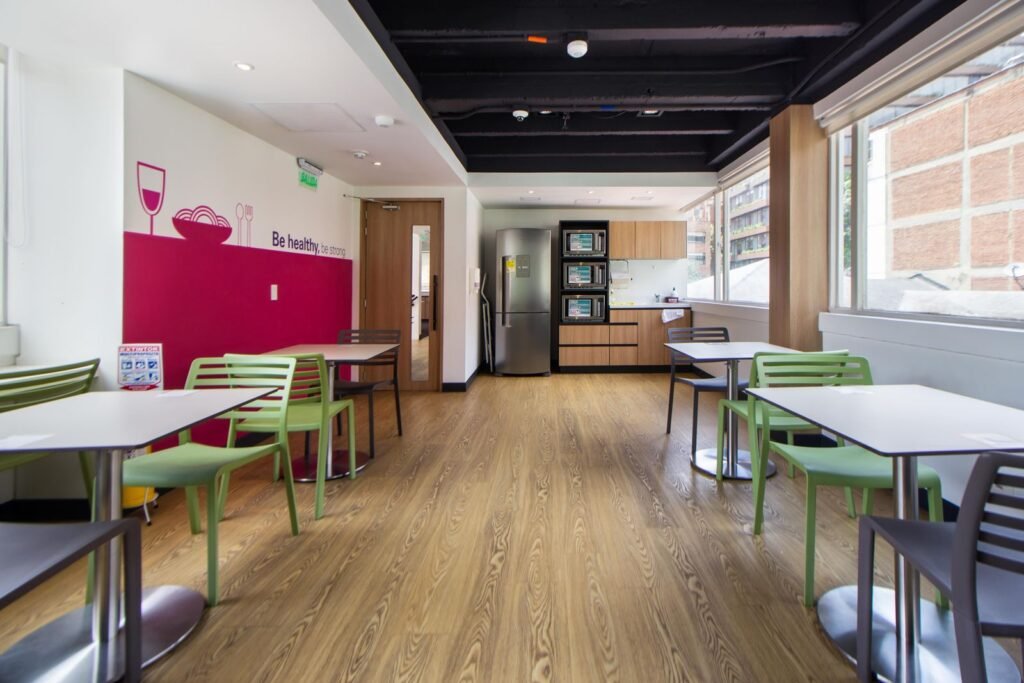
The office kitchen is the most heavily shared room in almost every workplace. Thirty people use one fridge, one microwave, one kettle and one sink, dozens of times a day, and responsibility for the mess belongs to everyone, which in practice means no one. The result is familiar to anyone who has worked in an office. A microwave with a geological record of exploded lunches, a fridge with anonymous containers pushing month-old leftovers to the back, a sponge that has become a health hazard in its own right, and a passive-aggressive note taped above the sink that changes nothing.
Breakout areas have the same dynamics with softer furnishings. Coffee gets ground into upholstery, crumbs collect under cushions and tables, and high-touch surfaces get touched constantly and cleaned rarely. None of this is a moral failure of the staff. It is a systems failure, because shared spaces with heavy food use need a defined cleaning system, not goodwill. This guide sets out what that system looks like, from daily routines through to periodic deep cleaning, and where a professional office cleaning service fits in.
Why Office Kitchens Are a Genuine Hygiene Risk
It is tempting to file the office kitchen under appearance, but it is properly a hygiene issue. Kitchens concentrate everything bacteria need, food residue, moisture, warmth and constant hand contact. Studies of workplace hygiene repeatedly find that kitchen touch points, kettle handles, fridge doors, microwave buttons and shared sponges, carry heavier contamination than most surfaces in the building, including the ones people worry about in washrooms.
The principles that govern safe food environments are well established. Guidance from the Food Standards Agency on cleaning in food handling areas centres on cleaning and then disinfecting food contact surfaces, controlling waste, and preventing the cross-contamination that happens when cloths and sponges spread bacteria from one surface to another. An office kitchen is not a commercial kitchen, but the same logic applies at smaller scale, and offices that borrow these habits have measurably fewer of the stomach bugs that hop around a workplace.
The Daily Routine That Keeps the Kitchen Civilised
Daily tasks are the foundation, and they need to be assigned, either to a cleaning contractor’s evening visit or to a genuinely enforced internal rota. Left to volunteers, they simply stop.
- Worktops and tables cleared, cleaned and disinfected
- Sink and taps cleaned, with the drain rinsed and left fresh
- Microwave wiped inside and out, including the door seal and buttons
- Kettle, coffee machine and water dispenser touch points wiped
- Fridge door, handle and dishwasher controls disinfected
- Floors swept or vacuumed and mopped, including under the bin
- Bins emptied, cleaned around, and relined, with food waste never left overnight
- Dishcloths and sponges replaced or removed for laundering, never left festering in the sink
The last item deserves emphasis. A single dirty sponge can undo every other line on this list, because each wipe spreads yesterday’s bacteria across today’s surfaces. Professional cleaners work with fresh colour-coded cloths for exactly this reason, keeping cloths for kitchen surfaces separate from those used anywhere else.
The Weekly and Monthly Layer
Beyond the daily reset, a second layer of tasks keeps the kitchen from slowly degrading. Weekly, the fridge should be cleared under a published policy, with unlabelled and expired items disposed of, shelves wiped and the door seals cleaned. The dishwasher filter needs rinsing, cupboard fronts and handles washing, tiles and splashbacks degreasing, and the bin itself, not just its liner, washing and disinfecting.
Monthly or quarterly, the deeper jobs come due. Inside cupboards where crumbs and spills gather, the tops of wall units where grease and dust form a felt-like layer, descaling the kettle and the taps, pulling out movable appliances to clean behind and beneath, and washing walls around bins and prep areas. These are the jobs no rota ever covers and every kitchen needs, and they are typically written into a professional cleaning specification precisely so they stop depending on anyone remembering.
The Fridge Problem, Solved by Policy Not Notes
Every office fridge drama has the same root cause, which is that nobody has authority over other people’s food. The fix is a written policy, agreed once and applied without exception. A fixed clear-out day each week, everything unlabelled or expired disposed of, containers left at the owner’s risk, and the policy displayed on the fridge door. When the clear-out is done by the cleaning contractor as part of their specification, the social awkwardness disappears entirely, because no colleague is throwing away another colleague’s lunch. The fridge stays usable, smells stop developing, and the passive-aggressive note economy collapses for lack of demand. The same policy approach works for the shared crockery cupboard and the draining board, a published rule, a scheduled reset, and a named party responsible for enforcing it, because shared spaces stay civilised on systems rather than sentiment.
Breakout Areas, Where Comfort Meets Crumbs
Breakout spaces blur categories. They are furnished like living rooms and used like cafes, which means they need both routine surface cleaning and periodic fabric care. Daily, tables and hard surfaces need cleaning and disinfecting, floors need vacuuming with attention under and behind seating, and cushions need straightening with crumbs removed from frames and folds. High-touch points, door plates, light switches and vending or coffee machine controls, belong on the daily disinfection list.
Periodically, the soft furnishings themselves need attention. Upholstered seating in a breakout area takes daily punishment from food, drink and constant use, and it benefits enormously from scheduled professional upholstery cleaning, typically once or twice a year. Carpeted breakout zones and the coffee-station traffic lanes around them soil faster than open office floor and should be on a shorter carpet cleaning cycle than the rest of the building. Booking these fabric refreshes ahead of quieter periods keeps disruption near zero.
Who Should Do What, Staff Versus Cleaners
The workable division of labour is simple. Staff handle the transactional mess they create, washing their own cup, wiping their own spill, labelling their own food. The cleaning contractor handles everything systematic, the daily disinfection routine, floors, bins, the weekly fridge policy, and the scheduled deeper tasks. Trying to run it the other way, with staff rotas covering systematic cleaning, fails in every office that tries it, because cleaning done resentfully in the last ten minutes of a working day is cleaning done badly.
For the contractor’s side to work, the specification has to name the kitchen tasks explicitly. Vague lines like kitchen area cleaned daily hide more than they promise. A good specification lists surfaces, frequencies and standards, so both sides know exactly what happens on a Tuesday night and what happens on the first Friday of the month. If your current arrangement cannot show you that list, that is the first thing to fix, and our cleaning guides include more material on getting specifications right.
Signs Your Kitchen Has Outgrown Its Current Arrangement
Some signals reliably indicate that the informal approach has run out of road. Smells that greet you at the kitchen door in the morning. A microwave people quietly avoid. Sticky floor patches that survive the nightly mop. Fruit flies in summer. Complaints surfacing in staff surveys or, worse, in comments from visiting clients who were given a coffee. Any of these means the room needs a professional reset, usually a one-off deep clean of the whole kitchen, followed by a proper daily and periodic specification to hold the standard.
The reset itself is worth describing, because it is a bigger job than most managers picture. A neglected office kitchen deep clean means every appliance cleaned inside and out and pulled forward where possible, cupboards emptied and washed internally, the sink and drain treated properly, tiles and splashbacks degreased, descaling of the kettle, taps and dishwasher, walls and high surfaces washed, and the floor machine-scrubbed or hand-detailed into the corners and under units where years of mop-water residue collects. Done once, it takes hours. Maintained afterwards by the daily and periodic layers, it never needs doing at that scale again, which is the whole economic argument for the system over the crisis cycle.
Hybrid working has changed the maths in some offices rather than removing the problem. Fewer people in the building has often meant reduced cleaning schedules, but kitchen use concentrates on the days everyone attends, so Tuesday to Thursday kitchens now work harder than the old five-day pattern while receiving less attention. If your office has shifted its rhythm, the kitchen specification should shift with it, weighting the cleaning onto the heavy days rather than spreading it evenly across a week that no longer exists.
Getting Your Kitchen and Breakout Areas Under Control
A clean office kitchen is one of those quiet quality signals that staff notice every single day, and it costs far less to maintain than most managers assume once a proper system is in place. Exclusive Property Facilities cleans offices across Manchester with kitchen and breakout routines written explicitly into the specification, from daily hygiene through fridge policy to scheduled deep cleans and fabric care. If your kitchen has become the room everyone complains about, get in touch for a quote and we will put a system around it.


Want this done properly at your property?
Tell us the building and the problem. We quote from a written specification, and contracts start with a three-month trial rather than a long tie-in.